|
✅ Bladder Sludge & Bladder
Stones in Chinchillas
Causes, warning signs, treatment, and how to help prevent them. 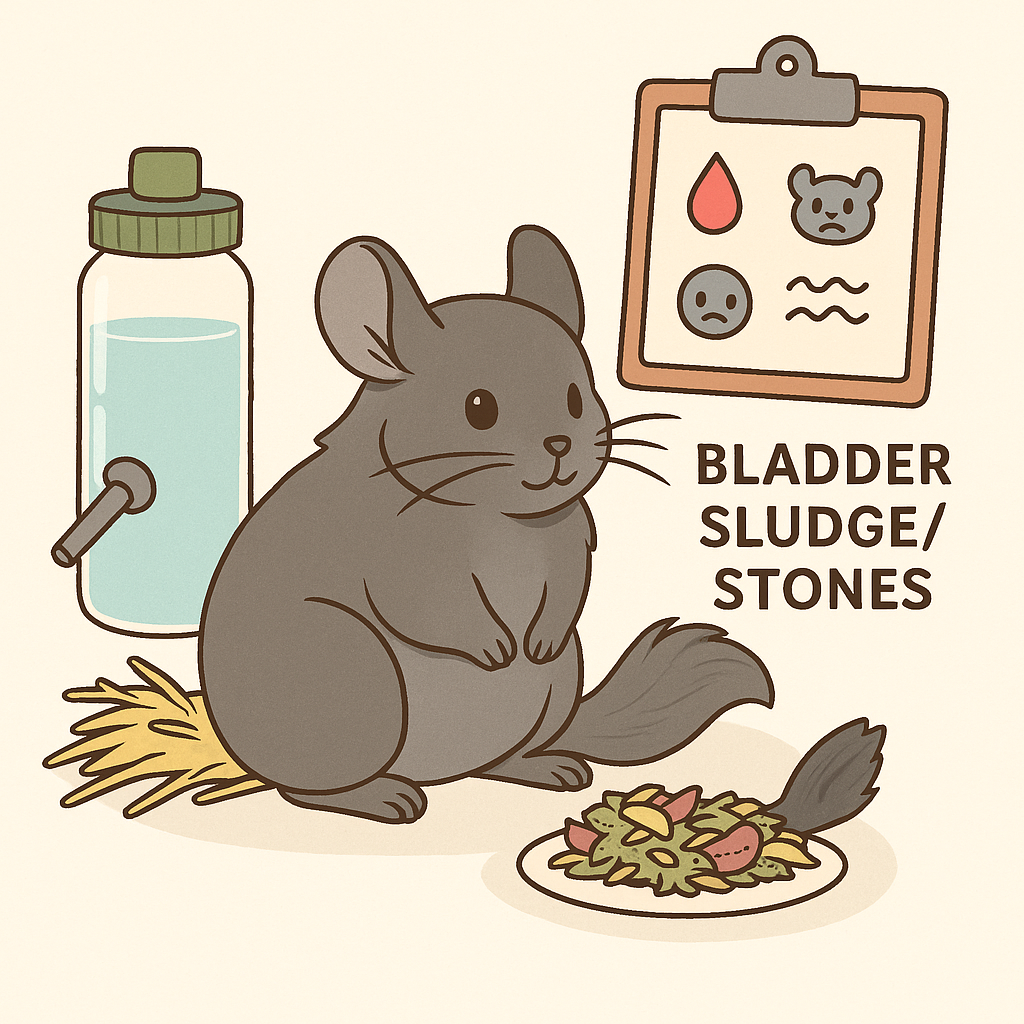 In mild cases, this becomes sludge (thick, gritty urine). In more severe cases, minerals form solid stones that can cause pain, inflammation, or dangerous blockages. Chinchillas often hide discomfort, so catching early signs is important. ⸻ ✅ What Causes Bladder Issues? Chinchillas have naturally mineral-rich urine, but stones or sludge are more likely when: • Very high-calcium diet (excess alfalfa or calcium-heavy treats) • Not enough water intake • Genetics / metabolic sensitivity • Limited exercise • Age (older chins develop stones more often) Some chins form stones even with a perfect diet — so it’s not always owner-caused. ⸻ ✅ Common Signs of Bladder Sludge or Stones Watch for: • Straining to pee • Frequent, small urinations • Strong-smelling urine • Pink or red tint in urine • Urine gritty, chalky, or thick • Wet or crusty fur around genitals • Hunched posture, quiet behavior • Sudden refusal to use the litter area • Decrease in appetite Any blood in urine = call a vet immediately. ⸻ ✅ What To Do Right Away If you see any of the signs above: 1. Call an exotic vet 2. Monitor urine output 3. Offer extra water (wet leafy greens only if your vet approves) 4. Keep your chin warm, hydrated, and stress-free Do not give pain meds at home unless prescribed — some medicines worsen kidney stress. ⸻ ✅ How Vets Diagnose A vet may use: • X-rays (to confirm size and location of stones) • Ultrasound • Urine tests • Bloodwork (to check kidney function) Even tiny stones are painful — so getting a diagnosis matters. ⸻ ✅ Treatment Options Treatment depends on severity: ✅ For Sludge • Pain medication • Anti-inflammatory meds • Increased hydration • Diet changes • Flushing the bladder under anesthesia (in some cases) ✅ For Stones • If small: monitored with pain control + hydration • If large or causing blockage: surgical removal A blocked urethra is life-threatening and needs emergency care. ⸻ ✅ Recovery at Home Most chins recover well after treatment with: • Pain medication • Hydration support • Limited jumping/climbing during healing • Close monitoring of urine and appetite Encouraging water intake helps: • Two water bottles in different areas • Glass bottles (cleaner and keeps water fresh) • Fresh hay available at all times ⸻ ✅ Can It Be Prevented? Not always — some chins are genetically prone — but you can lower risk: ✅ Timothy-based pellets ❌ Avoid alfalfa long-term (unless young/special diet) ✅ Clean, fresh water daily (glass bottle preferred) ✅ Lots of exercise ✅ Low-sugar, low-calcium treats ✅ Regular vet checks for older chins ⸻ ✅ When It’s an Emergency Go to a vet immediately if: • No urine output • Severe straining / crying while peeing • Blood clots in urine • Extreme lethargy • Not eating or drinking Urinary blockage can become fatal in hours — fast treatment saves lives. ⸻ ✅ Final Thoughts Bladder issues sound scary, but many chinchillas recover with treatment, pain control, and a few diet adjustments. If something feels “off,” trust your instincts — early care makes a huge difference. You’re doing the right thing just by learning and being prepared. 💛 |
|
|
One chin changed everything now we are changing care for all of them. Because Pippin deserved the best and so does every chin. |
     | Privacy Policy |