
|
Hideouts & Wheels for Chinchillas
Safe spaces to sleep, play, zoom, and de-stress. 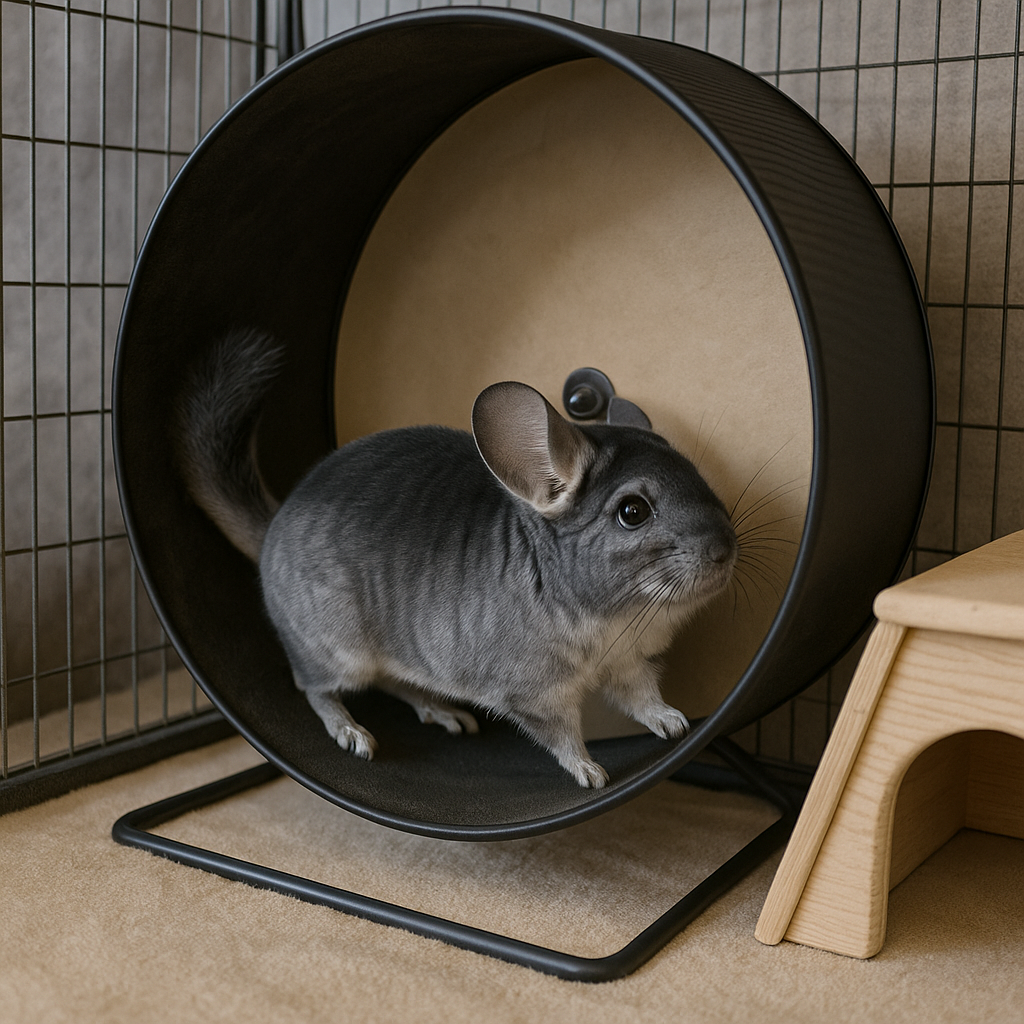 But not all products marketed for small pets are actually safe for chins. Here’s what to choose — and what to avoid. ⸻ ✅ Hideouts (Hides, Houses, & Cozy Spaces) Chinchillas are prey animals. That means they feel safest when they can retreat, nap, or decompress in a quiet, enclosed space. ✔ Best Types of Hideouts • Wooden hideouts • Ceramic or stone hides • Sturdy tunnels These materials are: ✅ Chew-safe ✅ Easy to sanitize ✅ Long-lasting ✅ Cool in warm months Wooden hides also provide extra chewing enrichment, which helps keep teeth healthy. Click on the Pictures to shop on Amazon: 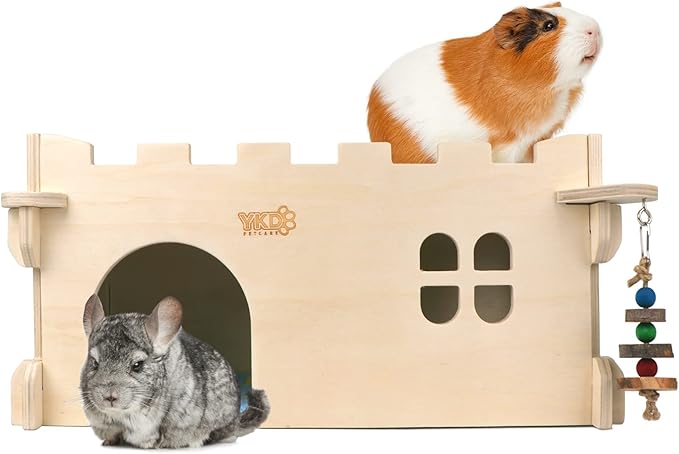
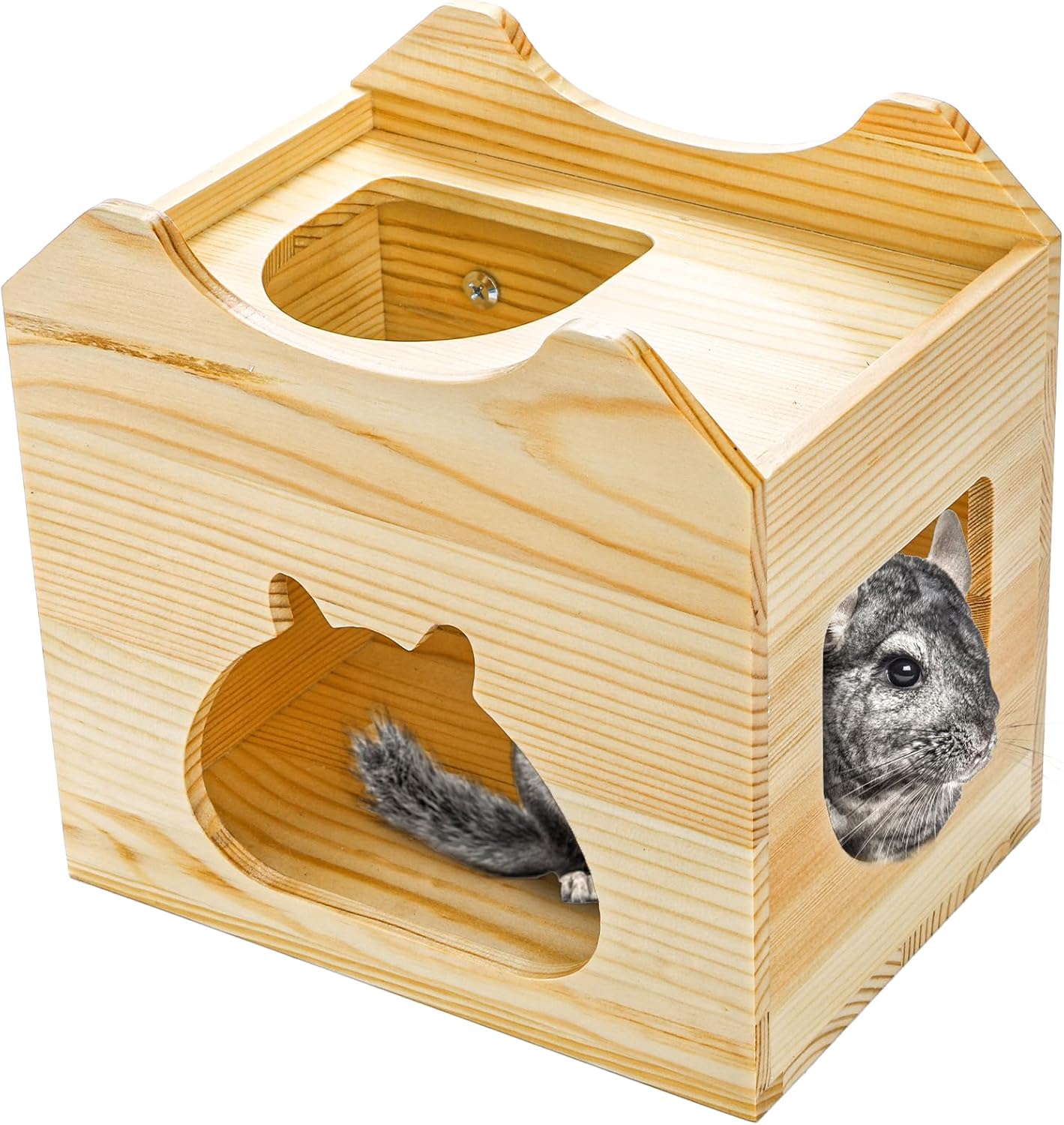
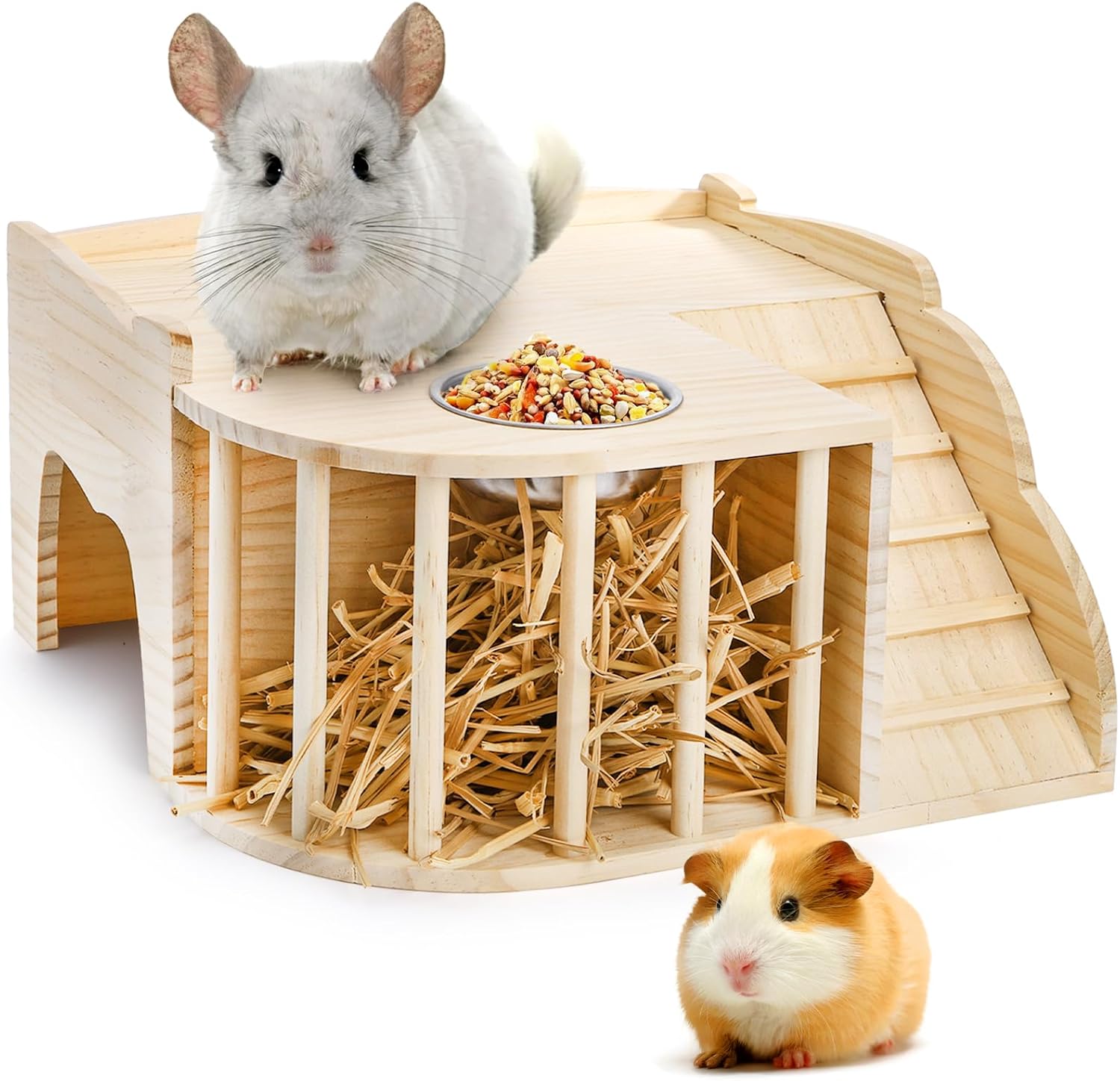 ⸻ ✅ What We Use ✔ Wooden hideouts in both cages ✔ Granite or tile resting spots under hides for hot weather ✔ Multiple hides for multi-level cages, so chins can choose where to rest Pippin loves his wooden hideout on the top shelf — king of the castle. Mochi prefers a hide near his hay and “food corner” because snacks are life. ⸻ ❗ What to Avoid 🚫 Plastic hideouts — can be chewed and swallowed 🚫 Fabric huts or hammocks — threads can be ingested or wrap around toes 🚫 Cardboard for regular use — fun for supervised play, but not a cage staple If it’s soft, shreddable, or coated in paint or varnish, it’s not a good long-term hide. ⸻ ✅ Wheels for Chinchillas Exercise wheels help chins burn energy and strengthen muscles — but only if they are safe. Most small-pet wheels sold in stores are NOT safe for chinchillas because they’re too small or made of dangerous materials. ✔ A Safe Chinchilla Wheel MUST Be: ✅ At least 15” (38 cm) in diameter (16–18” is ideal) ✅ Solid running surface (no mesh, no bars, no gaps) ✅ Metal or wood construction ✅ Open-face or solid-front — NOT enclosed ✅ Smooth edges to prevent tail or toe injury This prevents: • Spinal curvature from small wheels • Toenail/tail injuries • Falls • Chewing toxic coatings ⸻ ✅ Recommended Styles • Metal flying saucer–style wheels (flat, open front, very safe) • Giant chin-safe metal or wood wheels (solid track, no bars) If a wheel is made for hedgehogs, rats, hamsters, or sugar gliders — it’s too small. 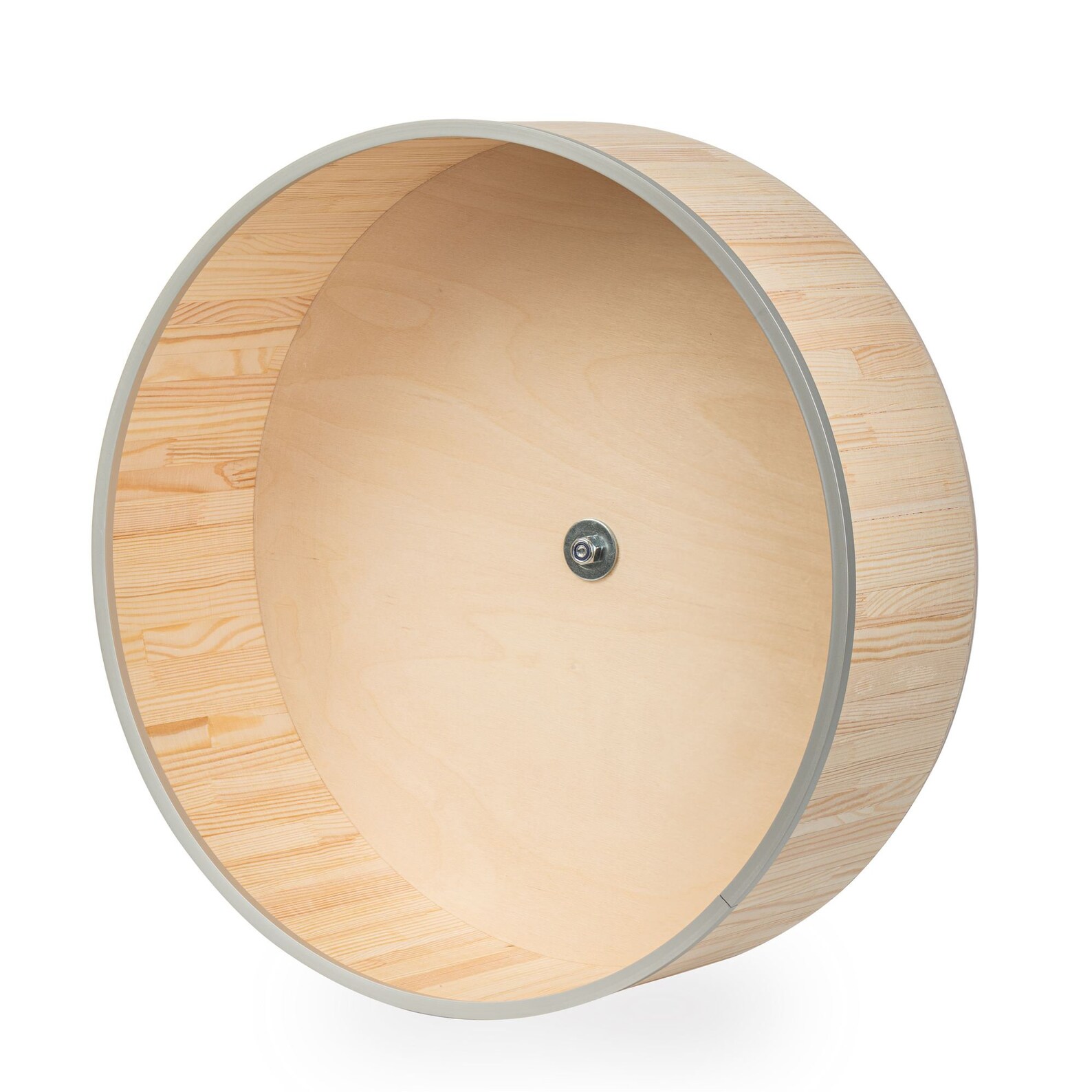
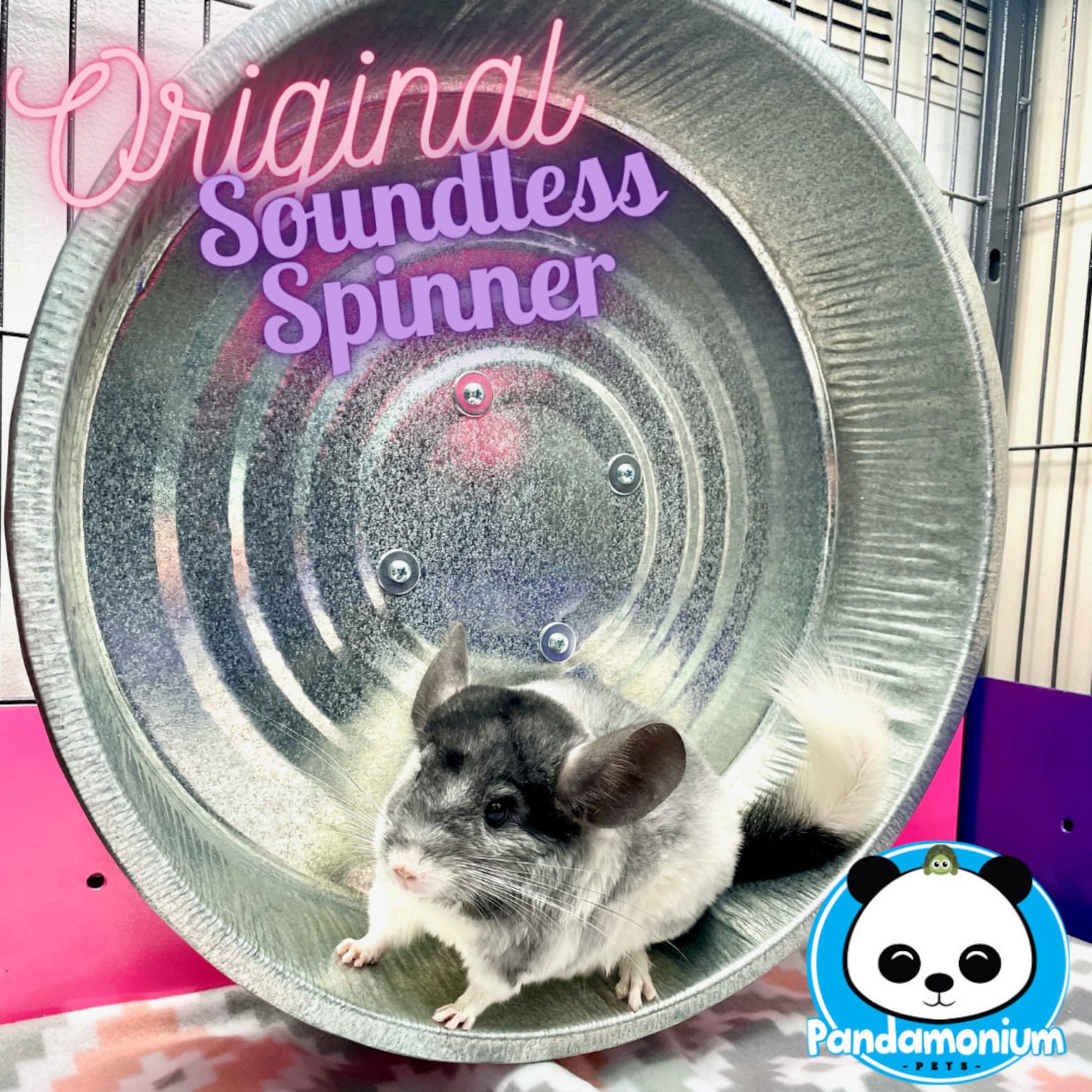
⸻ ❗ Wheels to Avoid 🚫 Mesh or wire wheels — toes and tails can get caught 🚫 Plastic wheels — dangerous if chewed 🚫 Enclosed “run-about” exercise balls — unsafe and can cause heatstroke 🚫 Small-diameter wheels — can twist spines Chinchillas need space to run naturally, not hunch. ⸻ ✅ Signs the Wheel is Too Small • Your chin’s back curves while running • Your chin can’t reach full stride • They slide or hit the top of the wheel • They avoid the wheel entirely If you’re unsure, bigger is always safer. ⸻ ✅ Enrichment Rotation Chinchillas can get bored with the same setup every day. Rotate hideouts, shelves, chew toys, and wheel placement every few weeks for fresh exploration. ⸻ ✅ Quick FAQ Does every chin need a wheel? Not required — but highly recommended for young or energetic chins. Do chins fight over wheels? Yes — many do. In bonded pairs, one wheel per chin prevents arguing. Do wheels replace playtime? No — they’re just another tool for safe exercise. ⸻ ✅ Simple, Safe Setup ✔ One or more chew-safe hideouts ✔ A solid-surface metal or wood wheel 15–18” ✔ No plastic or mesh ✔ Rotate for enrichment ✔ Monitor for chewing damage and replace if needed |
|
|
One chin changed everything now we are changing care for all of them. Because Pippin deserved the best and so does every chin. |
     | Privacy Policy |