| ✅
Health & When to Call the Vet
Because little symptoms matter in tiny animals 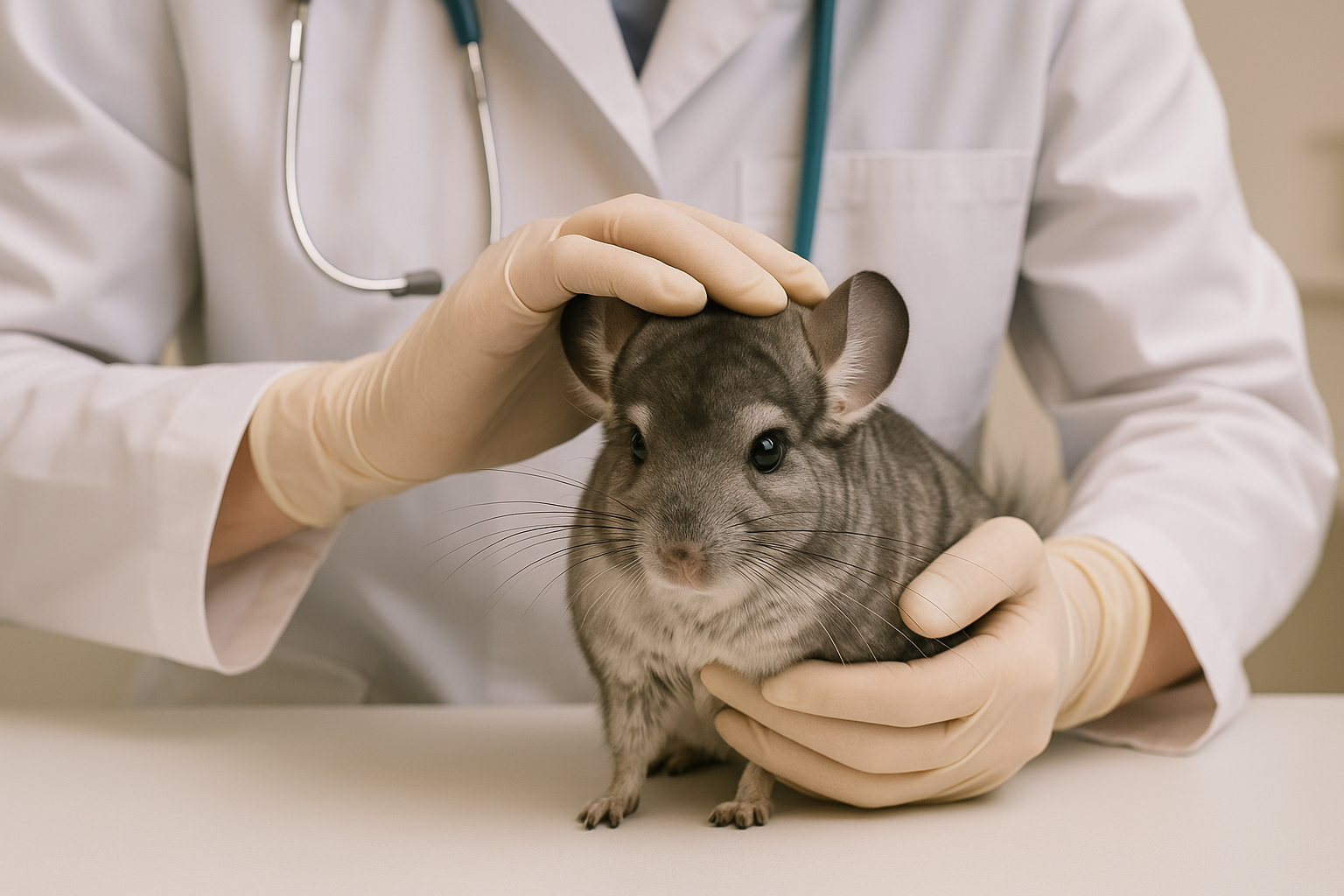 Small changes can be early warning signs — and catching problems early can save a life. Here’s how to monitor your chin’s health, what’s normal, and when it’s time to call an exotic-experienced veterinarian. ⸻ ✅ Daily Health Checklist Quick things to look for every day: ✔ Eating hay and pellets ✔ Normal poop size and shape ✔ Drinking from the water bottle ✔ Bright, alert eyes ✔ Curious, active behavior ✔ Normal teeth length and alignment ✔ Clean nose, clean bottom ✔ Breathing quietly and smoothly If all of these look good, your chin is most likely doing fine. ⸻ 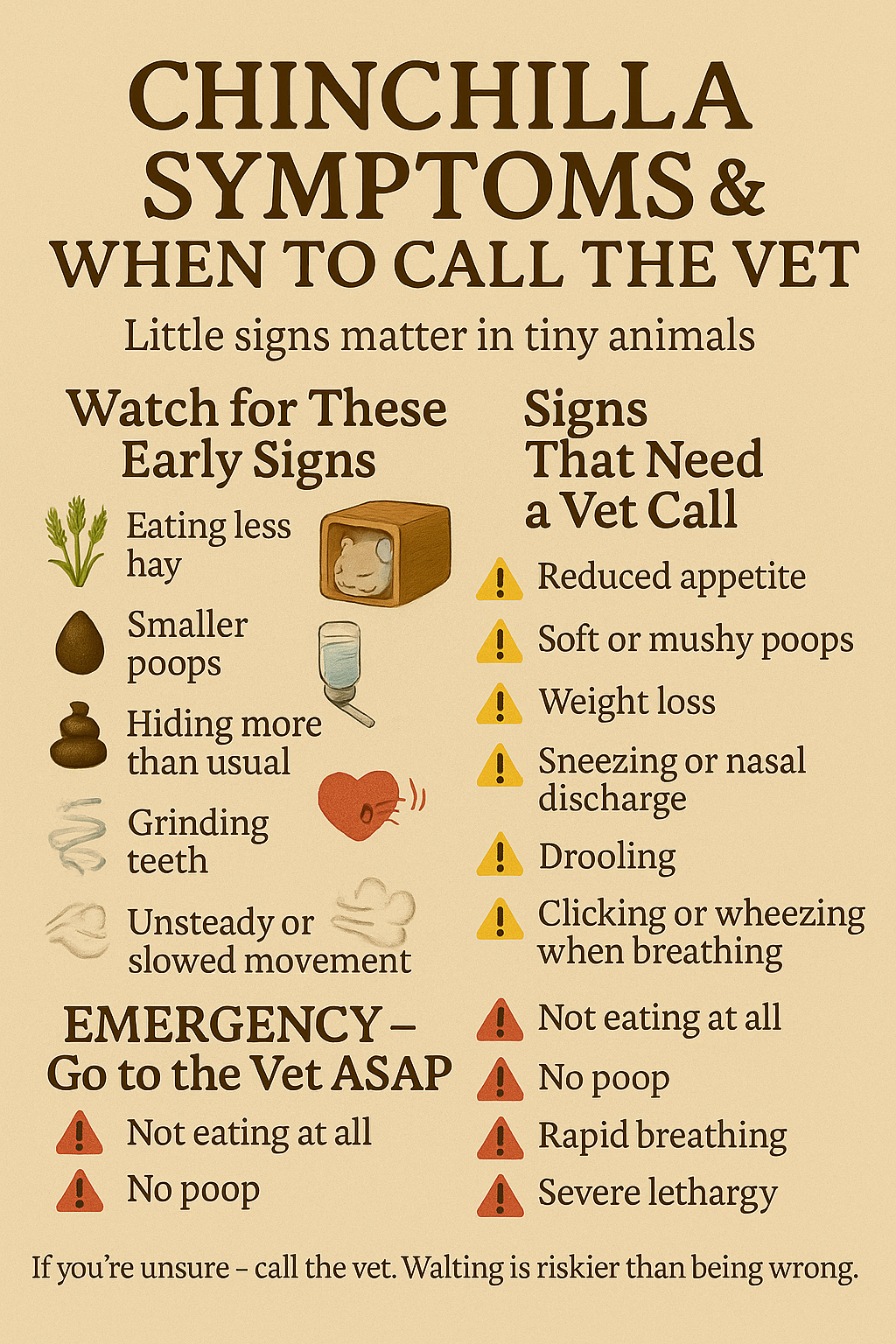 (Click on image to see it bigger) Even small changes are worth paying attention to. Call a vet if you see: 🚩 Appetite Changes • Refusing hay or pellets • Only eating treats • Syringe feeding needed • Drooling or difficulty chewing Why it matters: GI stasis can become life-threatening fast. ⸻ 🚩 Poop Changes • Tiny poops • No poops • Soft or mushy poops • Poop stuck to fur Why it matters: This can signal dehydration, gut slowdown, stress, or infection. ⸻ 🚩 Weight Loss • You should weigh weekly • Sudden drops are serious • Even 20–30 grams lost can be a warning Why it matters: Weight loss almost always means something is wrong internally. ⸻ 🚩 Lethargy or Weakness • Not exploring • Hunched posture • Hiding constantly • Won’t move away when touched Why it matters: Chins hide weakness — if you can see it, they feel awful. ⸻ 🚩 Respiratory Signs • Fast or labored breathing • Wet nose or discharge • Sneezing • Clicking or wheezing sounds Why it matters: Respiratory infections can become dangerous quickly. ⸻ 🚩 Teeth Problems • Drooling • Wet chin • Grinding noises • Picking at mouth • Reduced appetite Why it matters: Chinchilla teeth grow constantly — dental issues need vet care, not home care. ⸻ 🚩 Injury or Trauma • Limping • Falls • Screaming or panic • Cuts, swelling, or broken nails Chins are fast, fragile, and dramatic — any serious fall or squeal deserves a vet call. ⸻ 🚩 Behavior Changes • Suddenly aggressive • Biting cage bars • Not using dust bath • Not cuddling like usual • Excessive hiding Behavior is communication — especially in prey animals. ⸻ 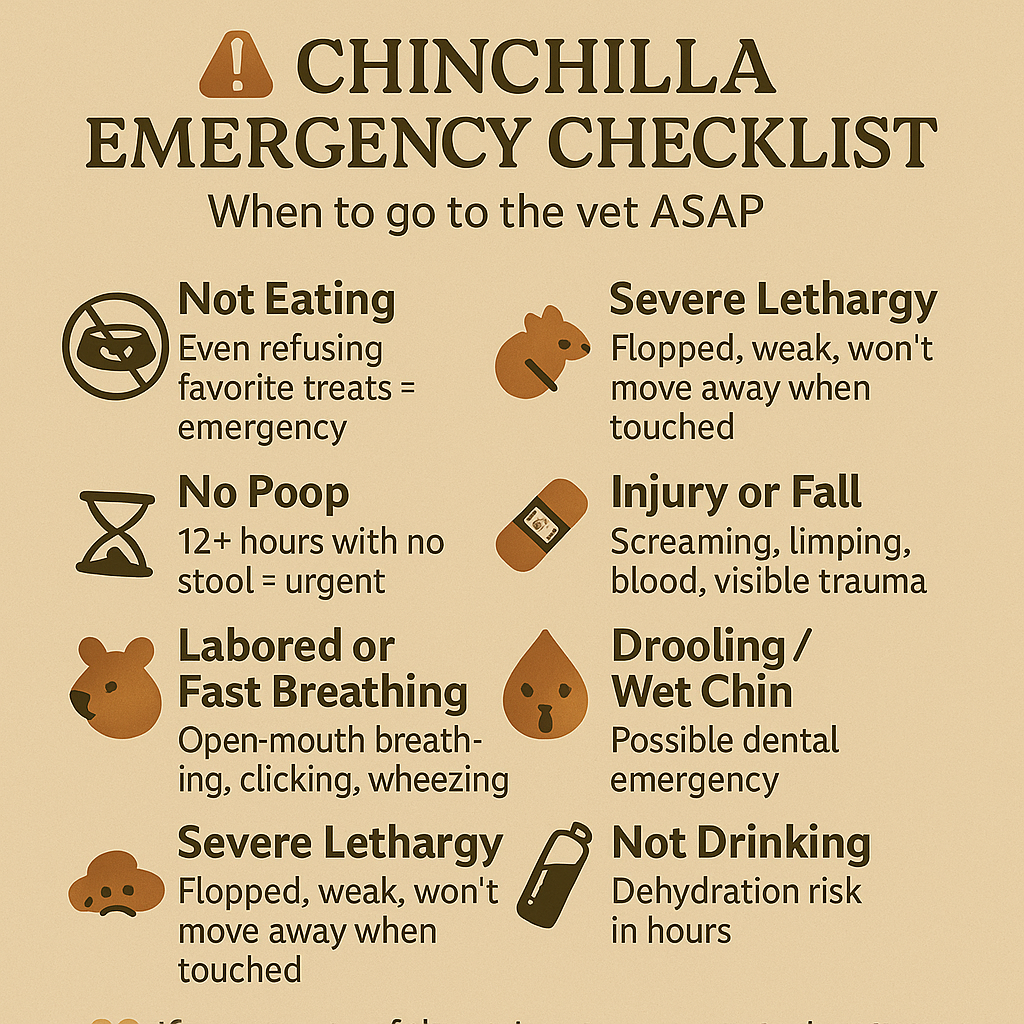 Go as soon as possible if you see: 🚨 Not eating at all 🚨 Not pooping 🚨 Severe lethargy 🚨 Continuous labored breathing 🚨 Large injury or bleeding 🚨 Suspected heatstroke 🚨 Broken tooth or jaw injury 🚨 Bloat (hard, swollen belly) If you’re unsure, call anyway — waiting is riskier than being wrong. ✅ Comfort Care While Waiting If your chin has stopped eating or seems unwell: • Offer fresh hay • Provide water or syringe small amounts • Keep in a quiet, cool room • Remove high shelves to prevent falls • Offer Critical Care (if vet-approved) • Add a hideout for stress comfort • Do NOT give human medications Supportive care buys time — but vet care solves the problem. ⸻ ✅ Routine Vet Care Even healthy chins should have: ✔ yearly wellness exam ✔ dental check ✔ weight monitoring at home ✔ a vet who knows chinchillas BEFORE an emergency Finding a chin-experienced vet ahead of time can save precious hours. ⸻ ✅ You Are Not Alone Chinchillas can be fragile. Not every illness is preventable. What matters is responding fast, caring deeply, and getting veterinary help when needed. If you ever feel unsure, it’s always safer to call. |
|
|
One chin changed everything now we are changing care for all of them. Because Pippin deserved the best and so does every chin. |
     | Privacy Policy |