
| Chinchilla 101
What to Expect • Temperaments •
Handling • Daily Care
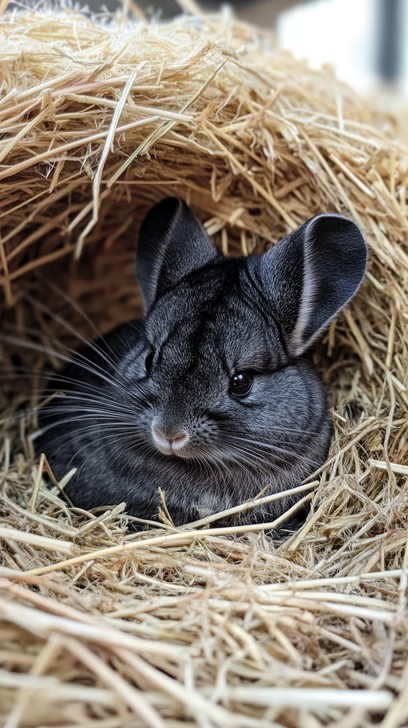 Lifespan: 10–20 years Best for: Calm, patient homes; gentle kids with supervision Temperament: Curious, alert, crepuscular (active dusk/dawn) Environment: Cool, dry, draft‑free (ideal 60–70°F / 16–21°C) Basics: Unlimited grass hay + measured pellets + fresh water Never: Heat, humidity, water baths, sugary treats, pine/cedar shavings New here? Start with the Beginner Setup Checklist (below) and our Care FAQ. What to Expect Chinchillas are social, intelligent, and routine‑loving. Many enjoy scritches and human interaction, but most prefer hands‑under support over being squeezed or chased. They’re not “starter pets,” but with the right setup and patience they become affectionate, hilarious companions who thrive on enrichment and predictable care. Daily Rhythm: Most active at night and during dawn/dusk. Expect evening zoomies, quiet mid‑day naps, and a burst of curiosity when you enter the room. Temperaments Confident Explorers: Front‑of‑cage greeters; food‑motivated; quick to train Observers: Hang back at first; bond through routine and calm presence Spicy Shy Beans: May “warn spray” (urine) or air‑chew when overwhelmed; improve with gentle, consistent handling and safe choices Signals to Learn: Relaxed: Ears neutral, soft posture, taking treats Stressed: Flat ears, tail swish, chatter, lunge/air‑chew, thumping Overheated: Mouth open, drooling, lethargy—act immediately (cool room, call vet) Handling Basics Scoop from underneath: one hand under chest, other supporting rump/feet Keep close to your body; avoid grabbing tails, ears, or mid‑air catches Start with short sessions; end on positive notes (treat crumb, scritches) Use a carrier for room transfers; no free chasing Kids & Chins: Always seated, hands low, quiet voices. Adults control duration and end the session before the chin does. Daily Care Hay: Unlimited timothy/orchard (fresh, dry, elevated hay rack) Pellets: 1–2 Tbsp/day of plain, high‑quality chinchilla pellets (no colored bits) Water: Fresh daily. Clean bottles weekly; check spouts for flow Treats: Tiny amounts (pinch‑size) of chin‑safe items only. Think herbs/flowers first; fruits rarely. Rotate to keep tummies happy Dust Baths: 2–4x/week, 5–10 minutes/session in a covered container. Remove when done Enrichment: Safe woods (apple, pear), pumice, vine toys, foraging, supervised play in a chin‑proofed area Cage Hygiene: Spot clean daily; deep clean every 1–2 weeks with pet‑safe cleaners. Dry fully before re‑entry Environment & Housing Temp/Humidity: 60–70°F (16–21°C), low humidity, great ventilation. Avoid heat spikes, direct sun, or rooms without AC Cage: Multi‑level, solid floors/shelves; bar spacing ≤ 1 inch (2.5 cm) Bedding: Paper‑based or fleece liners (washed scent‑free). Avoid aromatic softwoods Placement: Quiet, low‑stress room; away from kitchen/steam; no candles, diffusers, smoke Play Space: Escape‑proof, no wires/plastics; block behind appliances; supervise always Beginner Setup Checklist Must‑Haves: ✔ Multi‑level, solid‑floor cage ✔ Grass hay + rack ✔ Plain chin pellets ✔ Water bottle (backup on hand) ✔ Hideout + chew toys (safe woods, pumice) ✔ Dust + bath container ✔ Cooling stone/slab ✔ Carrier for travel and safe handling Nice‑to‑Haves: ◻ Fleece liners / washable pads ◻ Forage toys/puzzles ◻ Extra shelves/ramps ◻ Scale (weekly weight checks) Download: Printable Setup & First‑Week Checklist (coming soon) Nutrition Notes (Simple & Safe) Base Diet: 90–95% hay. Pellets support, not replace, hay Treat Hierarchy: Herbs/flowers > leaves > veggies (rare) > fruits (rarest) Portion Reality: A pinch is plenty. More isn’t more New Foods: Introduce one at a time; watch poop consistency and appetite Red Flags: sudden appetite drop, soft/absent stool, lethargy, drooling, bloating → contact an exotic‑savvy vet Health & Vet Find an Exotic Vet: Establish care before emergencies Routine: Annual wellness, nail checks as needed Emergency Kit: Vet’s number, carrier, simethicone (per vet guidance), thermometer for room temp, spare water bottle, critical care powder (vet‑advised) Bonding & Social Life Many chins prefer a buddy, but introductions must be slow: side‑by‑side housing, scent swaps, neutral territory, gradual sessions. Friendship is their choice; respectful neighbors are a valid outcome Training Tips: Target stick, name recognition, stationing at a mat, short recall for carrier entry. Always positive reinforcement Do/Don’t Cheat Sheet Do: cool room, big cage, unlimited hay, patient handling, routine, enrichment Don’t: heat/humidity, water baths, rope toys, plastic chews, sugary mixes, unsupervised free‑roam FAQs Q: Are chins good for kids?A: With adult supervision and gentle rules, yes. They’re delicate and fast—respect and patience are key. Q: Can I bathe my chin in water?A: No. Use dust baths to safely remove oils and keep fur healthy. Q: What temperature is safe?A: Aim 60–70°F (16–21°C). Overheating is dangerous. Q: Can they live alone?A: Yes—many thrive with dedicated human time. Pairs require careful introductions. Q: What’s a safe treat list?A: Small pinches of rose petals, chamomile, calendula, hibiscus, dandelion leaf, apple wood—avoid sugary fruits or give extremely sparingly. Resources & Links Beginner Setup Checklist → Click Here Pippin’s Blends (herbal enrichment) → Shop Here Adoption & Rescue Resources → (link) Emergency Vet Finder → (regional resource) We’re transparent about what we do and why. If you have questions, send us a message—happy to help. |
|
|
One chin changed everything now we are changing care for all of them. Because Pippin deserved the best and so does every chin. |
     | Privacy Policy |