| Enrichment & Play
⸻Safe setups • Training games • Toy rotation • Playpen guide 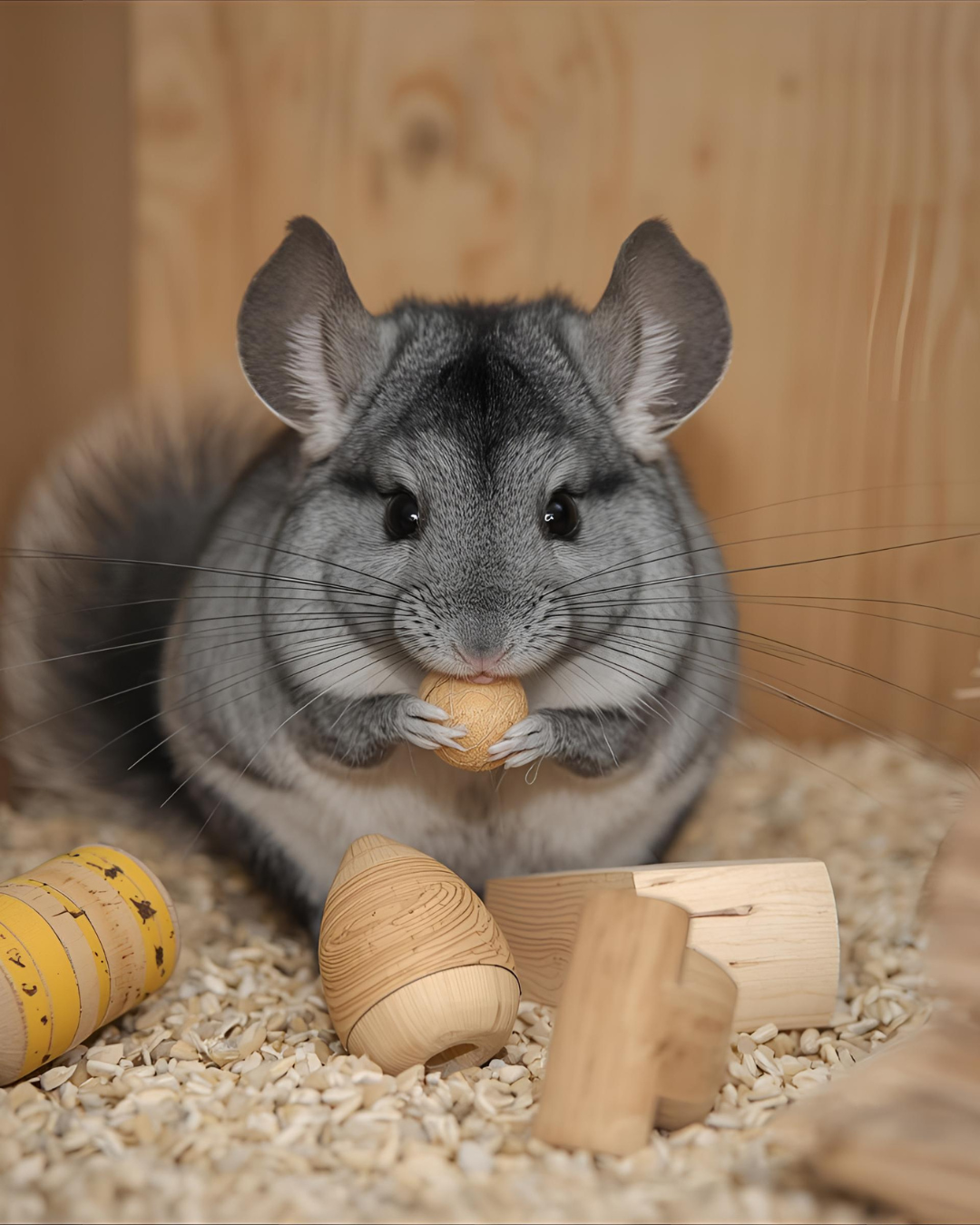 Why Enrichment Matters Chinchillas are smart, athletic, and curious. Daily enrichment prevents boredom, supports dental health, and turns routine care into bonding time. Small changes (new scents, textures, and foraging challenges) go a long way. Goal: 10–20 minutes of focused enrichment per chin, most days. ⸻ Daily & Weekly Rhythm • Daily (micro‑enrichment): hay foraging, chew swap, 2–3 minutes of training • 3–4×/week (playpen session): obstacle course + toy rotation • 2×/week (dust bath): before or after play, 5–10 minutes, then remove • Weekly: refresh chews/forage items, wipe play area, launder fleece Keep sessions short and positive; end on a win (scritches or a tiny herb pinch). ⸻ Playpen Setup (One Chin at a Time) Space: your 3–4 ft dog pens combined into a safe oval or rectangle with fleece/low‑pile rug. Anchors (choose 4–6): • Hideout or tunnel (untreated wood/cardboard) • Low platform/step + gentle ramp • Vine ball cluster / willow ball • Pumice stone or kiln‑dried pine chew • Forage box (paper bag with hay + herbs) • Hay pile or hay cube “bar” Optional: hanging vine toy, target mat (tile or small fleece square), cooling stone. Avoid: plastic toys, ropes/strings, gaps where toes can catch, warm rooms. ⸻ Toy & Forage Ideas • Chews: apple/pear wood sticks, vine rings, willow balls, pumice, kiln‑dried pine blocks • Forage: hay‑stuffed paper rolls, lunch‑bag “nests,” herb sprinkle trails, hay cubes • Movement: step‑ups, tunnels, cardboard chutes, low hops (no slick surfaces) • Scent novelty: rotate woods/herbs; swap hideouts between sessions (clean/dry) Rotation rule: offer 1–2 “new” items each week and retire 1–2 “old” ones. ⸻ Training Mini‑Guide (2–5 minutes) Cues we use: • Treat shake → come to front or station mat • Target touch → nose touches a stick tip • Stationing → hop onto a mat/tile for a reward • Arm climb → step onto forearm from platform for a reward How‑to: 1. Mark the moment (“yes” or a soft click) when they do the behavior 2. Deliver a tiny herb pinch 3. Repeat 3–5 times, stop while they’re still engaged Never chase. Use carriers/mats for transfers. Keep hands under the body when lifting. ⸻ Sample 7‑Day Enrichment Plan • Sun: Forage bag + target touch • Mon: Step‑up platform + vine ball chase • Tue: Dust bath + stationing on tile • Wed: Tunnel run + hay cube split • Thu: Scent‑swap hideouts + arm‑climb practice • Fri: Puzzle roll (herb‑stuffed TP roll) + chew swap • Sat: Obstacle “lap” + relaxed scritches session One chin per session until intros are complete; keep cages a few feet apart. ⸻ Safety Checklist • Cool room (60–70°F), low humidity, good airflow • Supervise at all times; no cords/wires within reach • Solid footing (fleece/rug), block under furniture gaps • Limit dust time; remove bath when done • End if you see stress: flattened ears, tail swish, air‑chew, lunge ⸻ FAQs How long should play last? 10–20 minutes is plenty; short, frequent sessions beat marathons. Can I give treats during training? Yes—use herb pinches, not sugary fruit. Keep portions tiny. What about wheels? Only chin‑safe, solid wheels sized for chins. If unsure, skip in playpen and focus on hops, foraging, and training. When can two chins share a pen? After slow introductions: side‑by‑side housing → scent swaps → brief neutral sessions with two humans watching. Stop at first sign of tension. ⸻ |
|
|
One chin changed everything now we are changing care for all of them. Because Pippin deserved the best and so does every chin. |
     | Privacy Policy |