|
✅ Nursing & Syringe Feeding
Support
When your chin needs a little extra help 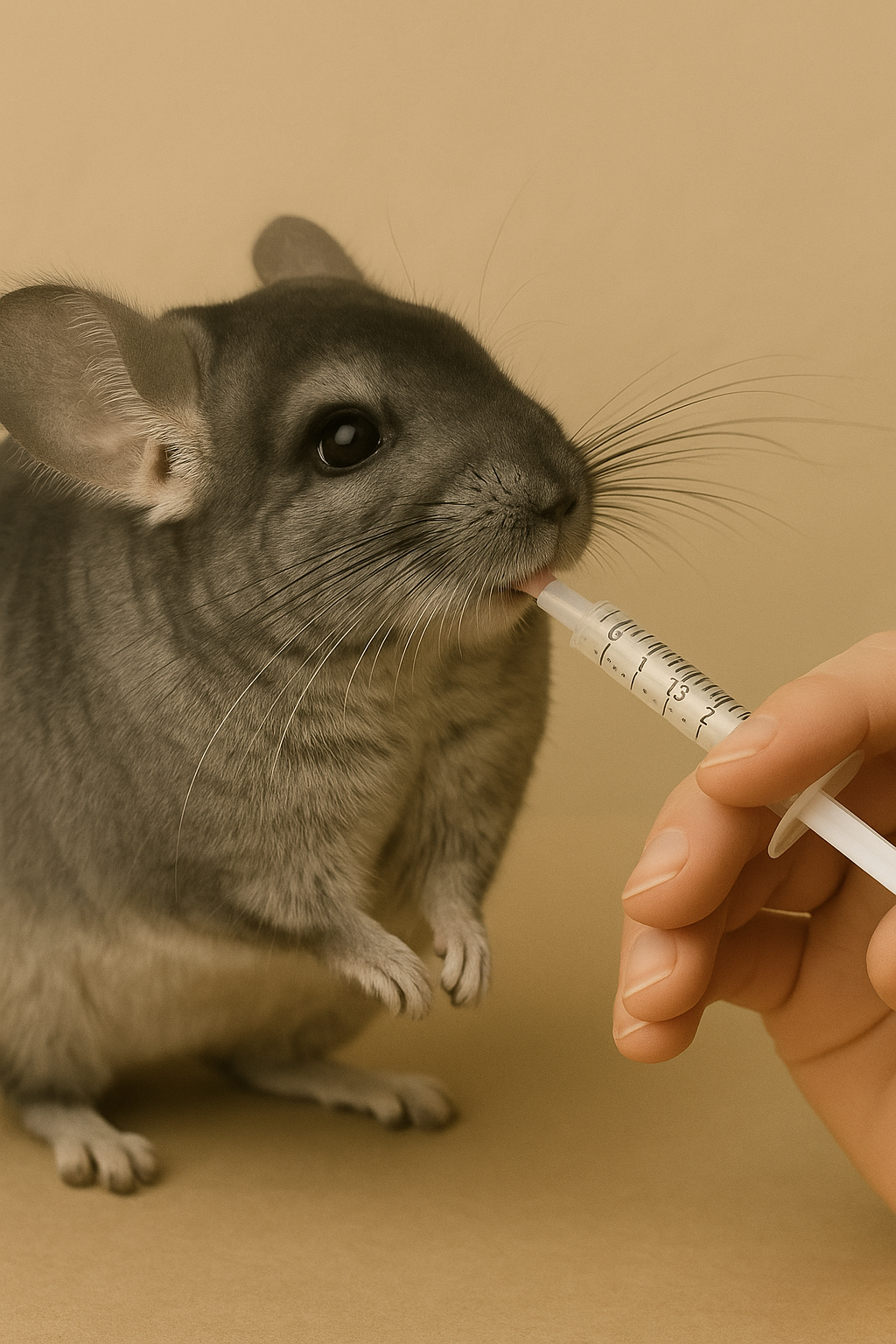 Syringe feeding isn’t just “helpful”… sometimes, it saves lives. If you’re here, you’re already doing the right thing. This guide walks you through supportive care with calm, step-by-step instructions, so you can help your chin safely. ⸻ ✅ When Syringe Feeding is Needed Supportive feeding is recommended when your chin: • hasn’t eaten hay or pellets in 6–12 hours • is only taking treats • is losing weight • has tiny or no poops • is recovering from anesthesia, dental work, illness, or stress • has a suspected GI slowdown If your chin is not eating at all — this is an emergency and requires an exotic vet. Syringe feeding is supportive care, not a cure. 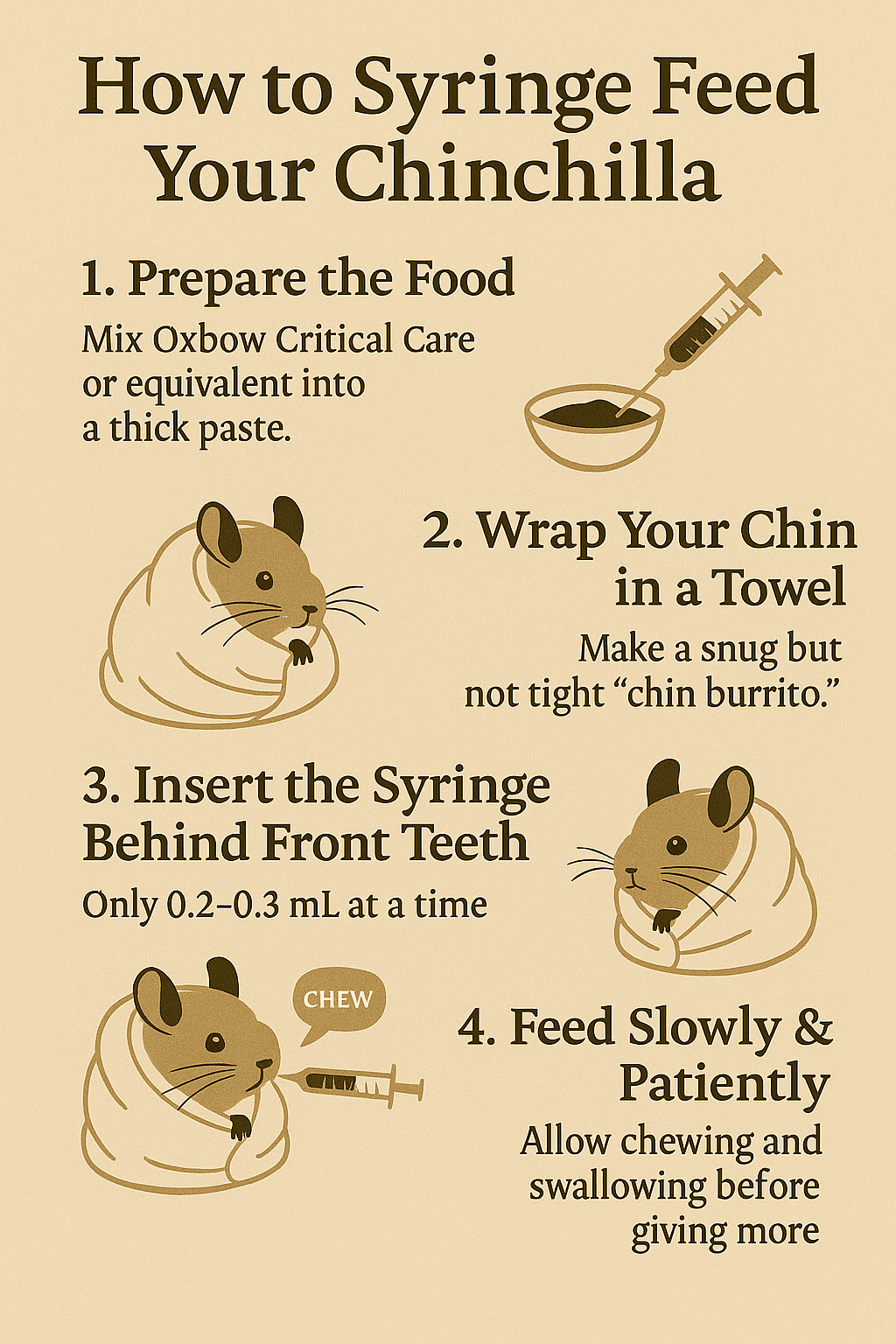 ✅ Supplies You’ll Need ✔ Oxbow Critical Care (Herbivore formula) or equivalent ✔ 1–3 mL or 5 mL curved-tip syringes ✔ A small bowl for mixing ✔ Warm water ✔ Paper towels (it gets messy) ✔ A soft towel to make a “chin burrito” for safe handling ✔ Kitchen scale (to track weight daily) Optional but helpful: • baby food jar lids for tiny serving dishes • a second person to help hold or calm your chin ⸻ ✅ How to Mix Critical Care 1. Place powder in a small bowl 2. Add warm water slowly 3. Mix until slightly thick — like applesauce 4. Let it sit 2–3 minutes to fully absorb 5. Load into syringe Tip: If the syringe clogs, add a tiny bit more water. ⸻ ✅ How to Safely Hold Your Chinchilla Most chins won’t just sit nicely and open their mouth. That’s okay. The safest method: ✅ Wrap gently in a towel (like a burrito) ✅ Support chest and back feet ✅ Never force the head backward ✅ Insert syringe at the gap behind the front teeth ✅ Only 0.2–0.3 mL at a time ✅ Allow chewing and swallowing before giving more Slow and patient is safer than fast. ⸻ ✅ How Much & How Often If not eating at all: • 4–5 feedings per day • 10–15 mL total daily, divided into smaller feedings • Go slow — never rush feeding If eating small amounts on their own: • 2–3 feedings per day • Smaller amounts to “top up the tank” Always follow your vet’s specific instructions if provided. ⸻ ✅ Hydration Support Hydration matters as much as food. You can: • offer fresh water • syringe small amounts of water (if approved by your vet) • add more water to the Critical Care mix Dehydration causes gut slowdown — hydration helps restart it. ⸻ ✅ Tricks for Picky or Stubborn Chins ✔ Warm the mix slightly (body-temperature only) ✔ Offer on a spoon to encourage natural tasting ✔ Put a little on their lips so they lick it off ✔ Feed in their cage door (some do better with “control”) ✔ Stay calm — they feel your stress Some chins (like Pippin!) decide suddenly that Critical Care is delicious. Others will make you work for every drop. Either is normal. ⸻ ✅ What You’re Watching For ✔ poop increasing ✔ brighter, more alert behavior ✔ chewing hay on their own ✔ normal water intake ✔ stable or rising weight Keep a small note in your phone: • time fed • how much • poop changes • meds given It helps more than you think. ⸻ ✅ When Supportive Care Isn’t Enough Call a vet immediately if you notice: 🚨 no poop 🚨 no swallowing during feeding 🚨 bloated, hard belly 🚨 collapsing, weakness 🚨 choking or coughing during feeding 🚨 breathing fast or open-mouth 🚨 drooling from pain or dental issues ⸻ ✅ You Are Doing a Good Job Nursing a chin is emotionally exhausting. You worry. You track poop. You syringe food at 2 AM. You cry. You celebrate tiny bites of hay like winning the Super Bowl. It’s okay. Syringe feeding isn’t something “bad owners” do — it’s something that loving owners do. Your chin isn’t alone. And you’re not either. |
|
|
One chin changed everything now we are changing care for all of them. Because Pippin deserved the best and so does every chin. |
     | Privacy Policy |