
|
✅ Dental Disease in Chinchillas
What it looks like, how it happens, and how to help. 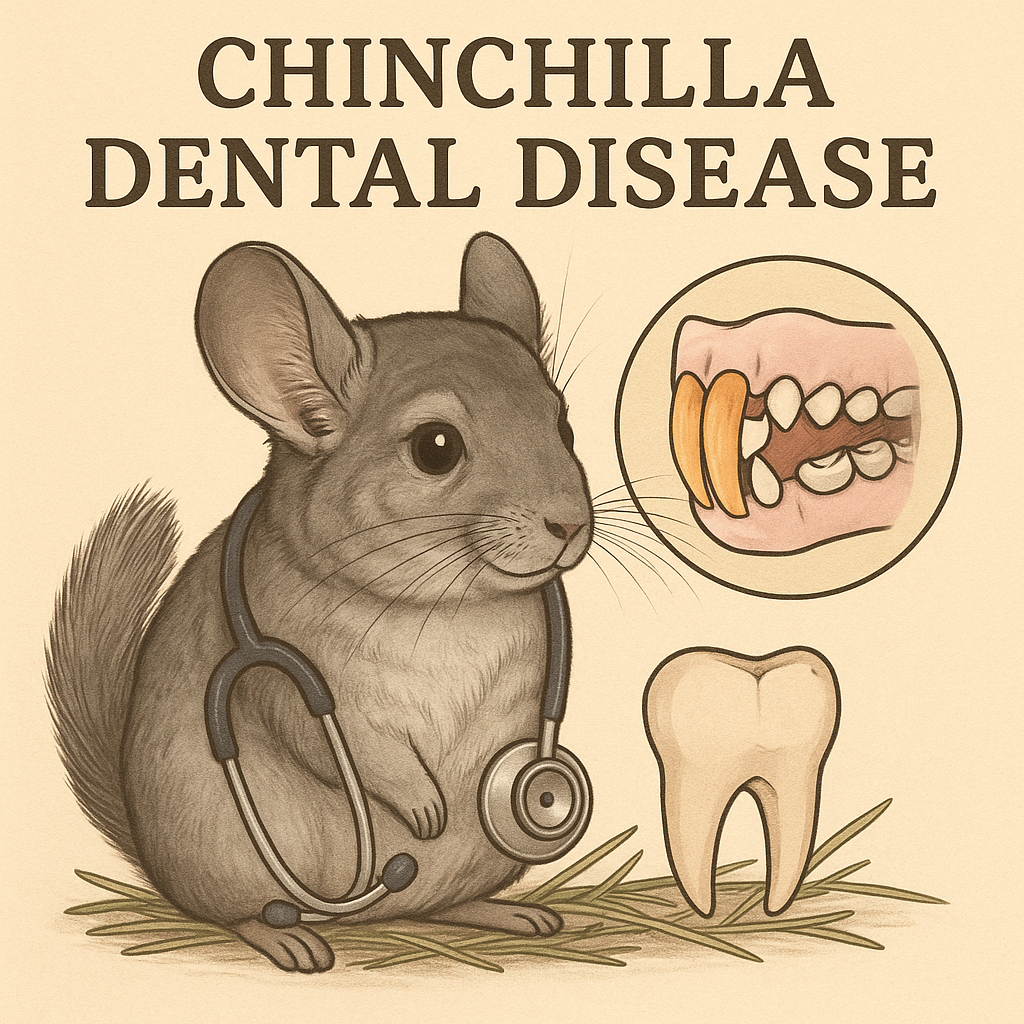 Every single day of their life, the front teeth and the hidden back teeth (molars) grow and wear down as they chew hay, sticks, and food. When the teeth don’t wear down properly — or grow in a bad direction — painful dental disease develops. This is extremely common in domestic chinchillas, and early detection makes a huge difference. ⸻ ✅ Common Signs of Dental Problems If you notice any of these, a dental exam from an exotic-experienced vet is needed: • Drooling (“wet chin”) • Refusing pellets but still eating treats • Chewing slowly or dropping food from the mouth • Weight loss or bony hips • Small, dry, or fewer poops • Rubbing mouth or pawing at face • Loud tooth grinding (pain) • Swollen or watery eyes • One-sided tearing (often root elongation) • Sudden dislike of hay • Picking out only soft foods Chinchillas hide pain extremely well — so even one of these signs matters. ⸻ ✅ What Causes Dental Disease? Dental problems aren’t caused by “bad owners.” Most of the time, it’s genetics. Top causes include: ✔ Genetic jaw shape or tooth alignment ✔ Insufficient hay chewing (not enough fiber to grind teeth) ✔ Overbred or poor-quality breeding lines ✔ Previous injury or mouth trauma ✔ Lack of safe chewing materials Even the best-cared-for chinchillas can develop dental disease. It’s sadly very common. ⸻ ✅ What Dental Disease Actually Looks Like The problem is almost always inside the mouth where owners can’t see it: • Spurs / points on molars that cut the tongue and cheeks • Tooth root elongation — roots grow upward into the jaw or skull • Abscesses near roots or gums • Overgrown incisors from improper alignment Most dental problems can only be diagnosed by: • Exotic vet exam • Oral exam under sedation • Sometimes skull X-rays or CT Pet stores can’t diagnose this. Only an exotic-experienced veterinarian can. ⸻ ✅ Treatment Options Treatment depends on the type and severity of the problem. ✔ Molar Filing / Burring A vet trims overgrown molars under anesthesia. This relieves pain and lets the chin eat normally again. Some chins only need it once. Others need every few months for life. ✔ Incisor Trimming If front teeth are overgrown or misaligned, vets trim them safely. Never use nail clippers or human tools — this can shatter teeth or cause fractures. ✔ Pain Management Medications like: • Meloxicam • Gabapentin • Sometimes antibiotics if infection is present These reduce discomfort, especially after a dental procedure. ✔ Nutritional Support If a chin has trouble chewing: • Critical Care / Carnivore Care • Softened pellets • More frequent feedings • Monitoring weight daily ⸻ ✅ Can It Be Cured? Here’s the honest truth: • If dental disease is caused by alignment or genetics, it cannot be cured. • It can be managed long-term with regular trims and proper diet. • Many chinchillas live happy lives with periodic dental work. • Some cases progress to the point where pain and quality of life become hard to manage. You are not a bad owner if this happens. Dental disease is heartbreaking and common in domestic chinchillas. ⸻ ✅ Prevention & Early Detection While you can’t change genetics, you can support dental health: ✔ Unlimited hay — every day ✔ Offer a variety of hays: timothy, orchard, meadow ✔ Safe chew woods: apple, willow, pumice, loofah ✔ Avoid soft diets or “treat-heavy” feeding ✔ Weekly weigh-ins ✔ Check chin & jaw area for wetness or drool ✔ Track appetite and poop size Catching dental problems early reduces complications and pain. ⸻ ✅ When to See a Vet Make an appointment if: • Your chin stops eating pellets or hay • Drooling begins • Weight drops • Poop becomes small or infrequent • They only want treats, not food Dental pain = food refusal = GI stasis risk. Don’t wait and “see if it gets better.” It rarely does. ⸻ ✅ Life With a Dental Chinchilla Some chins: ✔ Need routine trims ✔ Need softer foods ✔ Need syringe feeding during flare-ups ✔ Stay happy and sweet for years Others develop: ● Severe root elongation ● Abscesses ● Difficulty eating despite treatment When that happens, an exotic vet will help decide when quality of life is declining. ⸻ ✅ Final Notes If your chinchilla has dental disease, it’s not your fault. Even perfect care cannot prevent genetic issues. What matters is: ❤️ You noticed ❤️ You cared ❤️ You sought help Chinchillas with dental needs often have the sweetest, gentlest personalities — maybe because they know how much their humans help them. |
|
|
One chin changed everything now we are changing care for all of them. Because Pippin deserved the best and so does every chin. |
     | Privacy Policy |