|
✅ Diarrhea & Soft Stool in
Chinchillas
What it means, common causes, and how to help. 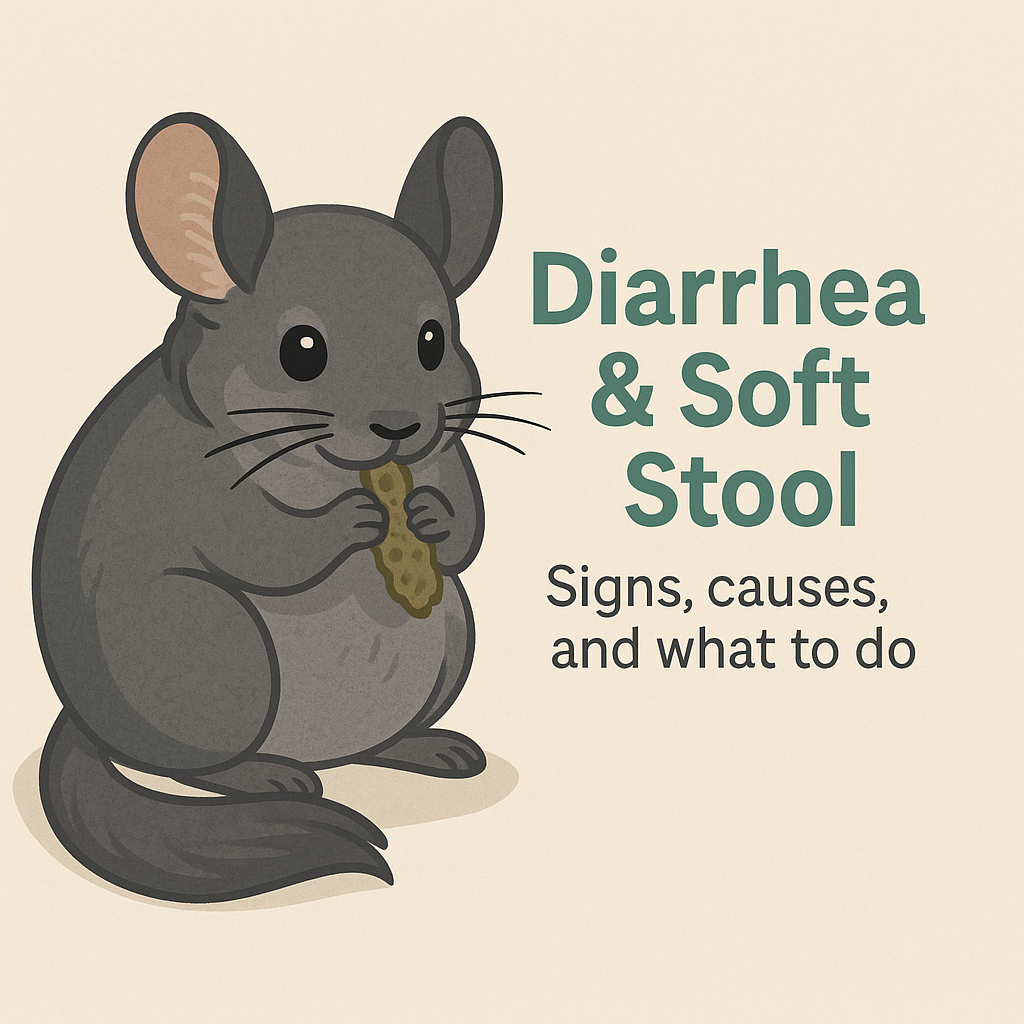 If stool becomes soft, sticky, smears, watery, or clumps together, something is wrong. Soft stool is never normal in chinchillas — and true diarrhea can be dangerous very quickly, especially in babies, seniors, or sick chins. The earlier you act, the easier it is to correct. ⸻ ✅ Signs of Soft Stool or Diarrhea Call an exotic vet if you notice: • Mushy, wet, sticky poop • Poop stuck to fur or feet • Strong odor from droppings • Poop smeared around cage or shelves • Diarrhea soaking litter or bedding • Sudden decrease in appetite • Lethargy or hiding • Weight loss or dehydration If stool becomes liquid, it’s an emergency. 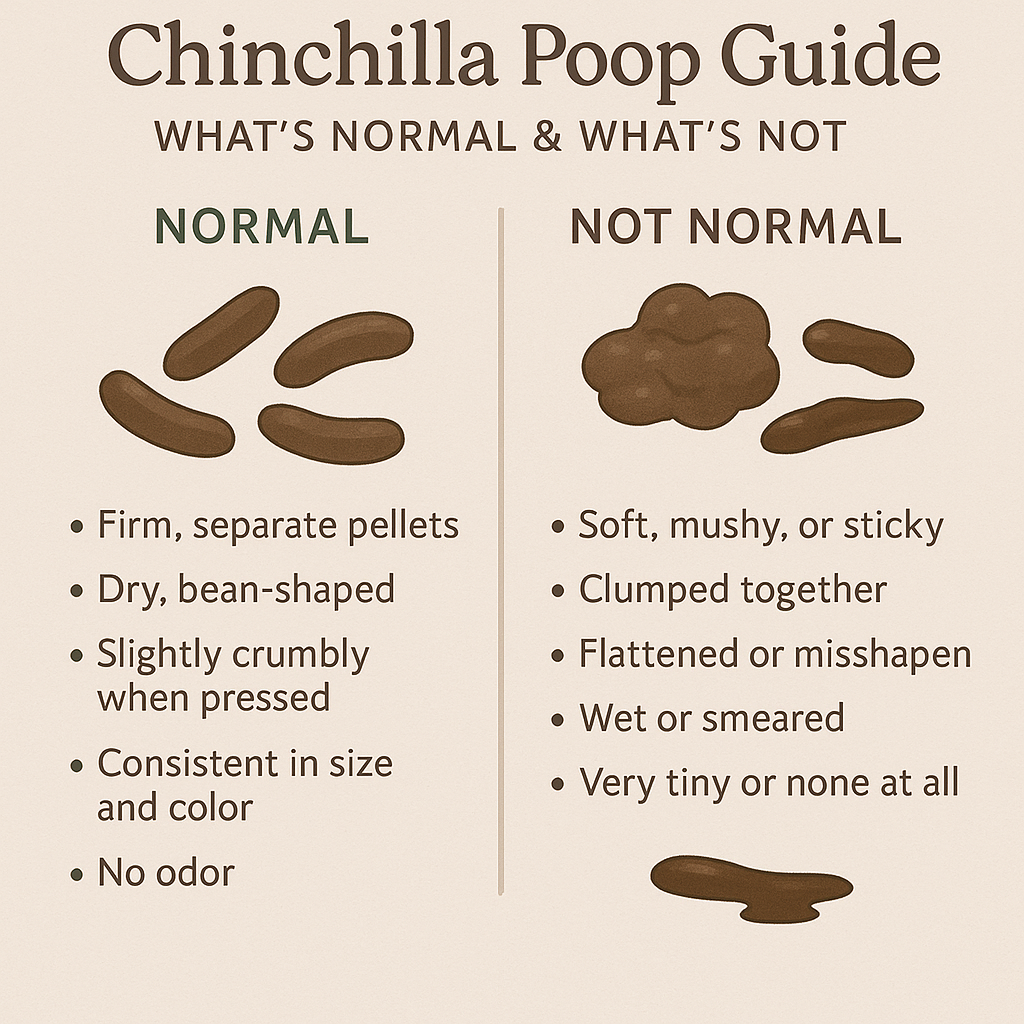 ⸻ ✅ Common Causes Soft stool can happen for many reasons — some mild, some serious: ✅ Diet changes – Too many treats – Too much fruit or sugar – Introducing new herbs or foods too fast ✅ Stress – New home – Vet visits – Cage moves – Loud noise or new animals ✅ Illness or infection – Bacterial imbalance – Parasites (coccidia, giardia) – Respiratory infection affecting appetite – Dental pain affecting chewing ✅ Poor diet – Pellets with seeds or dried fruit – Alfalfa-based pellets in adults – Low-quality hay or not enough hay ✅ Antibiotic side effects Some meds disrupt gut bacteria and need probiotic support (ask your vet). Even a small diet mistake can cause soft stool — chins have very sensitive GI systems. ⸻ ✅ What To Do Immediately If stool is soft: 1. Stop all treats and sugar No fruit, no raisins, no yogurt drops, no foraging mixes with sugary pieces. 2. Hay only High-quality timothy or orchard grass, unlimited. 3. Fresh water Clean bowl or bottle daily. 4. Monitor poop, appetite, and energy If your chin stops eating or pooping → emergency vet. 5. Call your exotic vet Explain when the soft stool started and any diet changes. ⸻ If stool is liquid or watery (diarrhea): ✅ Contact an exotic vet immediately ✅ Dehydration comes fast and can be fatal ✅ Vet may need fluids, antibiotics, or parasite treatment Do not wait to “see if it clears.” ⸻ ✅ How Vets Treat Soft Stool / Diarrhea Depending on cause, a vet may: • Run a fecal test for parasites or infection • Prescribe safe antibiotics • Give fluids for dehydration • Recommend Critical Care if appetite is low • Suggest probiotics to rebalance gut flora • Check teeth (dental pain often triggers diet changes → GI upset) Never give human antidiarrheal meds — many are toxic to chins. ⸻ ✅ When To Be Concerned Urgent if: • Stool becomes watery • Your chin stops eating • Very small or no poop • Lethargy or refusing movement • Weight loss • Grinding teeth (pain) • Dehydration (sunken eyes, dry mouth) Any combination of soft stool + not eating is a medical emergency. ⸻ ✅ Prevention You can help prevent digestive upsets by: ✔ Unlimited hay daily ✔ Plain, timothy-based pellets ✔ No seed-mix or treat-filled pet store food ✔ Introduce new foods SLOWLY (1–2 small items per week) ✔ Minimize sugary treats ✔ Keep stress low ✔ Provide clean water and clean cage Chinchillas thrive on simple, stable diets. ⸻ ✅ Honest Notes Some cases clear with hay-only diets and rest. Some require medication or fluids. Some are caused by parasites even in indoor chins. A few are life-threatening — especially in babies and seniors. Soft stool does not mean you did something wrong. Chinchillas have delicate tummies, and even tiny changes can upset their balance. What matters is that you noticed, acted, and asked for help. |
|
|
One chin changed everything now we are changing care for all of them. Because Pippin deserved the best and so does every chin. |
     | Privacy Policy |