
|
✅ Heatstroke in Chinchillas
Why it happens, emergency signs, and how to prevent it. 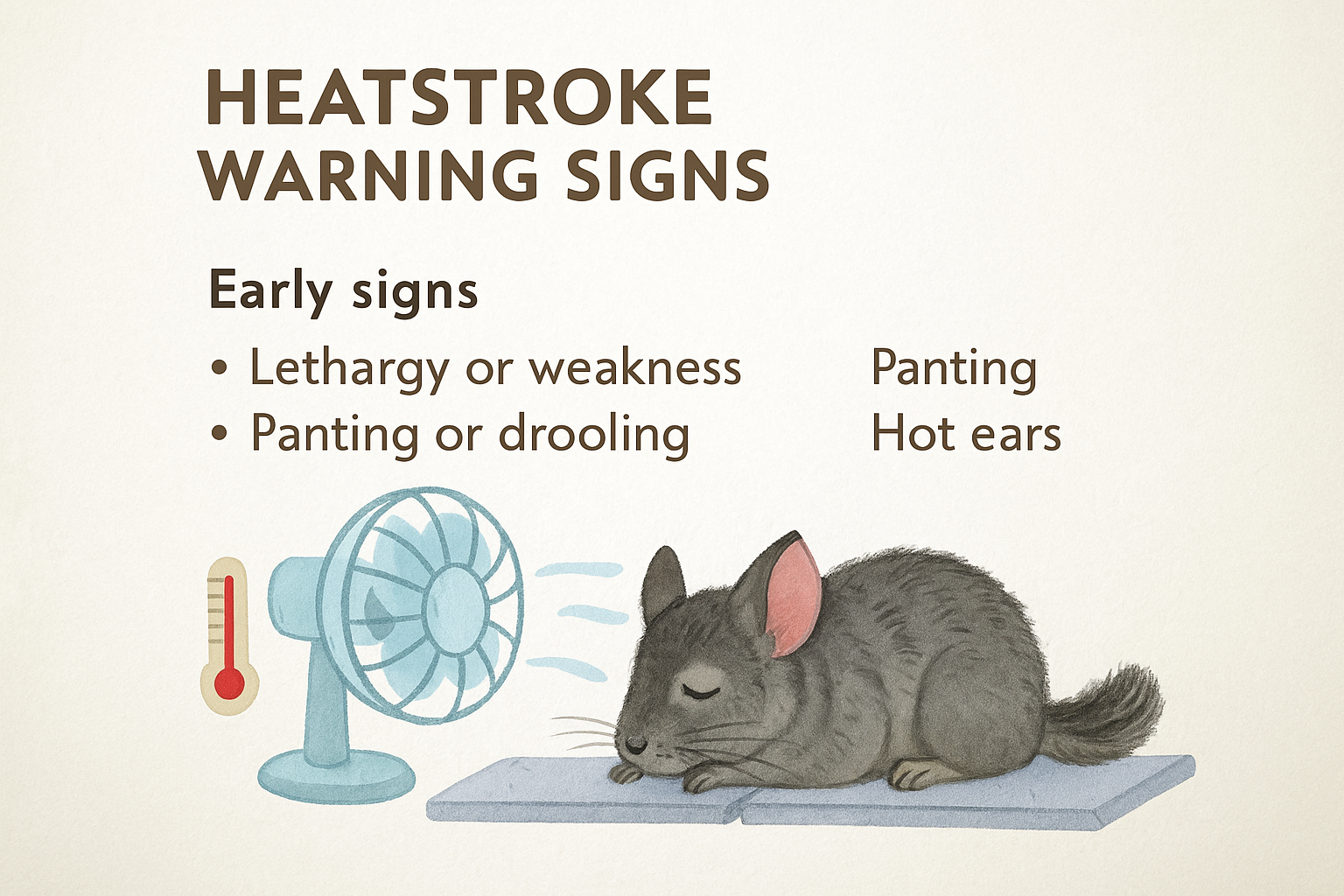 Their dense fur traps warmth, which makes them overheat quickly — far faster than cats, dogs, rabbits, or people. Heatstroke can be fatal if not treated immediately, but it is also one of the most preventable medical emergencies. ⸻ ✅ Safe Temperature & Humidity Range • Ideal temperature: 60°F–70°F (15°C–21°C) • Danger zone: 75°F+ (24°C+) • Humidity: Keep below 50% whenever possible If you feel warm in the room, your chinchilla is even warmer. ⸻ ✅ Early Signs of Overheating If you notice any of these, act quickly: • Lethargy or refusing to move • Rapid breathing • Panting or tiny open-mouth breaths • Sprawled out instead of curled up • Warm or hot ears • Drooling • Wetness around the mouth or chest • Weakness or wobbling At this stage, cooling and a vet are needed — heatstroke can progress in minutes. ⸻ ✅ Severe Emergency Signs • Open-mouth breathing • Seizures or collapse • Unresponsive • Body feels hot to the touch • Pale or blue gums This is a life-threatening emergency — seek immediate veterinary care. ⸻ 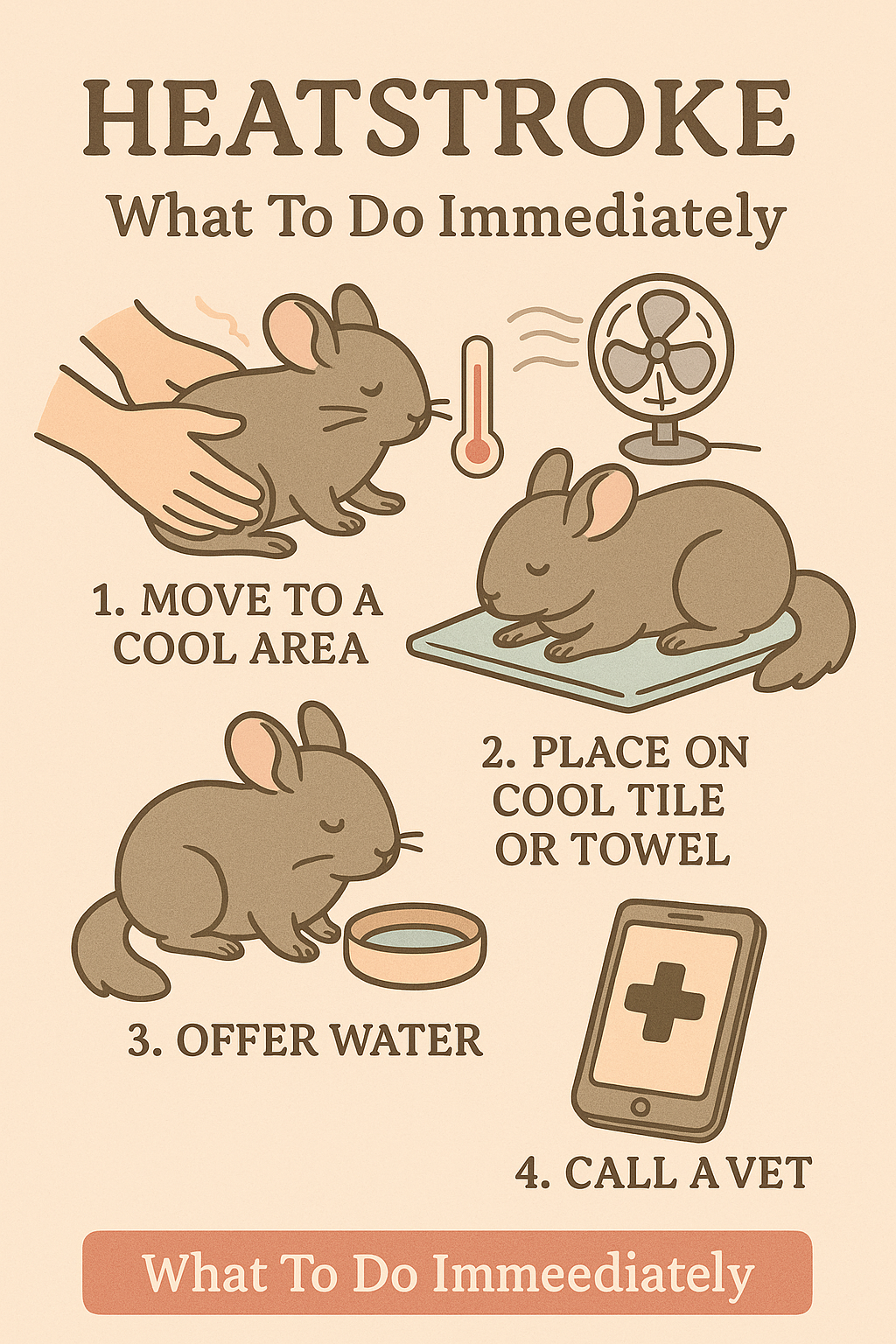 If you suspect heatstroke: ✅ Move your chinchilla to a cooler room ✅ Offer cool (not cold) water ✅ Place them near a fan (blowing past them, not directly at them) ✅ Offer a chilled granite tile or frozen water bottle wrapped in fleece ✅ Keep them calm and quiet ❌ Do NOT: • Put them in water • Give ice baths • Blast them with cold air • Put ice directly on their body Rapid temperature shock is dangerous. After stabilizing, call an exotic vet. ⸻ ✅ How Vets Treat Heatstroke Depending on severity, a veterinarian may provide: • IV or sub-Q fluids • Oxygen support • Cooling therapy • Medication for swelling or shock • Bloodwork to check organ damage Heatstroke can cause complications hours after the event — even if the chin looks “better.” Always contact a vet after a serious overheating episode. ⸻ ✅ Common Causes of Overheating • Hot weather / no AC • Direct sunlight on cage • Poor ventilation • Humid basement or bathroom • Car rides in warm weather • Heating vents blowing on the cage • Being held in warm hands too long Even “comfortable” human temperatures can be dangerous for chins. ⸻ ✅ How to Prevent Heatstroke ✔ Keep room 60–70°F ✔ Use air conditioning in summer ✔ Monitor humidity (aim for ≤50%) ✔ Use granite/chinchilla cooling tiles ✔ Keep cages away from windows and vents ✔ Never leave chins in cars ✔ Travel with ice packs wrapped in towels ✔ Give dust baths on schedule — they help lower body heat ✔ Have backup plans for power outages (battery fans, cool basement room, etc.) Prevention saves lives. ⸻ ✅ If You’re Ever Unsure ✔ Feel their ears — hot ears = overheating ✔ Check breathing — fast or heavy = concern ✔ Look at energy level — sudden laziness = warning ✔ Watch for drooling — often a first sign When in doubt, treat it like an emergency. ⸻ ✅ Honest Notes Most heatstroke deaths happen because owners didn’t know how sensitive chinchillas are. You’re here learning — that already makes you an exceptional owner. Heatstroke is terrifying, but also highly preventable with the right environment. ⸻ ✅ You Are Your Chinchilla’s AC They depend on you for a safe temperature — and you’re doing the right thing by educating yourself. If your home ever gets hot: • Move them to a cooler room • Run AC or fans • Offer cool tiles • Check on them more often Safe chinchillas are cool chinchillas. ❄️🐹 |
|
|
One chin changed everything now we are changing care for all of them. Because Pippin deserved the best and so does every chin. |
     | Privacy Policy |