
|
✅ Injuries & Broken Toes in
Chinchillas
What to watch for, what to do, and when it’s an emergency. 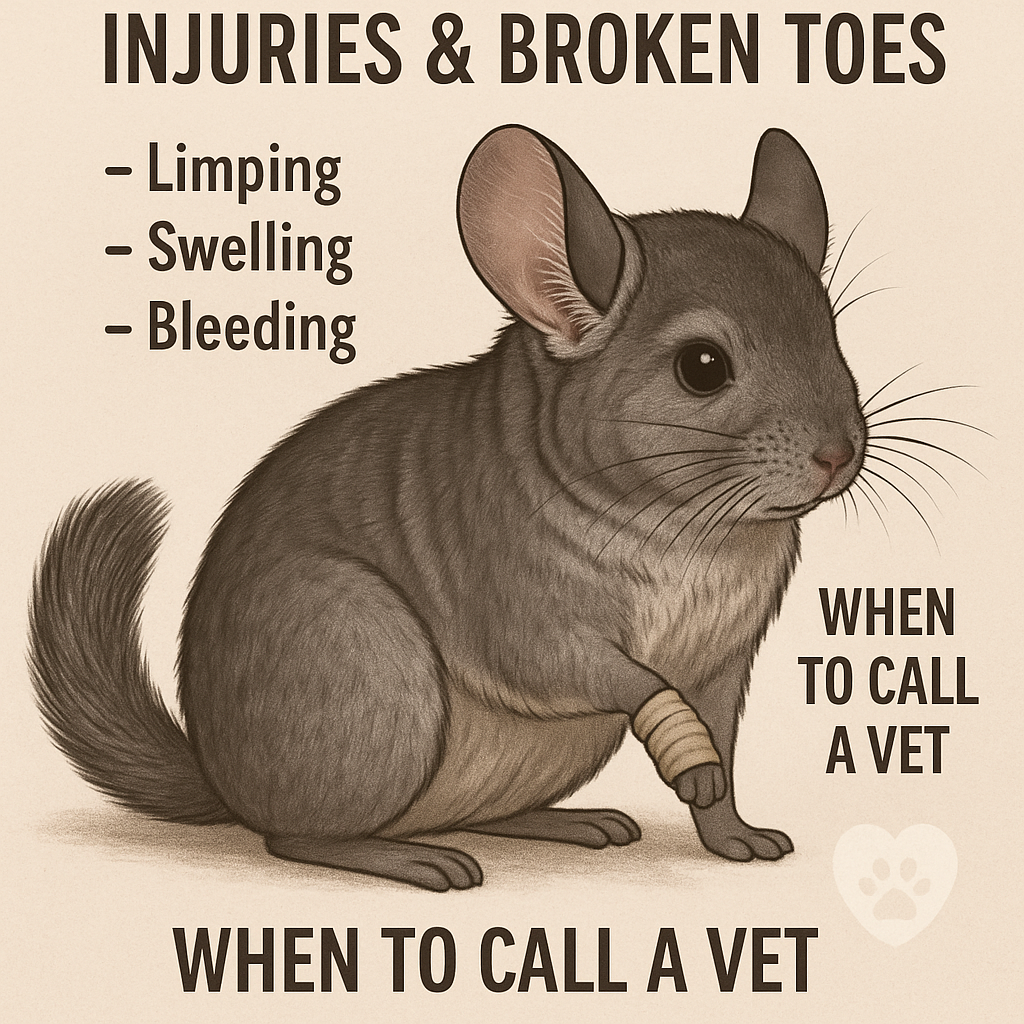 A fall, a misstep, or even getting a tiny foot caught in fabric or cage bars can lead to sprains, cuts, or broken toes. Most injuries are treatable — the key is recognizing the signs early and getting veterinary help. ⸻ ✅ Signs Something Is Wrong A chinchilla may show: • Limping or favoring one leg • Holding a foot up while standing • Reluctance to jump or climb • Swelling on a toe or paw • Broken or missing toenail • Bleeding or scabbing • Sudden change in activity Some chinchillas will keep moving normally even with an injury, so any sudden limp deserves attention. ⸻ ✅ Common Causes of Toe & Foot Injuries • Getting a toe caught in fleece, bedding holes, or soft toys • Running on wire flooring or ramps • Climbing and slipping • Caught nails on fabric loops or frayed liners • Rough landings during zoomies • Fighting with a cage mate This is one reason many owners switch to solid flooring, fleece liners, and safer ramps — fewer accidents happen. ⸻ ✅ What To Do Right Away If you notice limping or a foot injury: 1. Remove dust baths — dust can irritate open wounds 2. Clean visible blood with saline or warm water 3. Keep the environment calm (no climbing levels, no tall jumps) 4. Check nails — if one is torn, don’t try to trim it further 5. Call an exotic vet Even minor injuries can become infected, so getting a professional exam is important. ⸻ ✅ How Vets Treat Foot & Toe Injuries Depending on severity, your exotic vet may: • Take X-rays to check for fractures • Prescribe pain medication • Use antibiotics if there’s an open wound • Trim a damaged nail to prevent snagging • Bandage or splint (only if needed) Most broken toes heal well with rest, reduced activity, and medication. ⸻ ✅ At-Home Care During Healing • Keep the cage simple — remove high shelves • Offer soft bedding or fleece • Avoid dust baths until skin is closed • Monitor for swelling, redness, or discharge • Give all prescribed meds Some chins want to do parkour even while injured — try your best to keep things low and safe. ⸻ ✅ When It’s an Emergency Contact a vet ASAP if: • Swelling is increasing • The foot is turning dark or purple • The chin won’t put weight on the leg • Bleeding won’t stop • You see bone or a deep wound • Your chin stops eating Pain alone can cause appetite loss, so pain control is crucial. ⸻ ✅ Prevention Tips You can reduce injury risk by: • Using solid flooring (not wire) • No loose strings or frayed fleece • Safe ramps and shelves • Nail trims if nails curve or catch • Supervising out-of-cage time Accidents aren’t always preventable — chinchillas are fast, spring-loaded athletes — but safety changes help. ⸻ ✅ Final Thoughts Foot injuries can look scary, but with proper vet care, most chinchillas recover completely. If something looks “off,” trust your gut and get help early — chins hide pain well, so you’re never being overcautious. You’re doing right just by learning. |
|
|
One chin changed everything now we are changing care for all of them. Because Pippin deserved the best and so does every chin. |
     | Privacy Policy |