|
✅ Respiratory Infection &
Pneumonia in Chinchillas
How to recognize the signs, what causes it, and what to do. 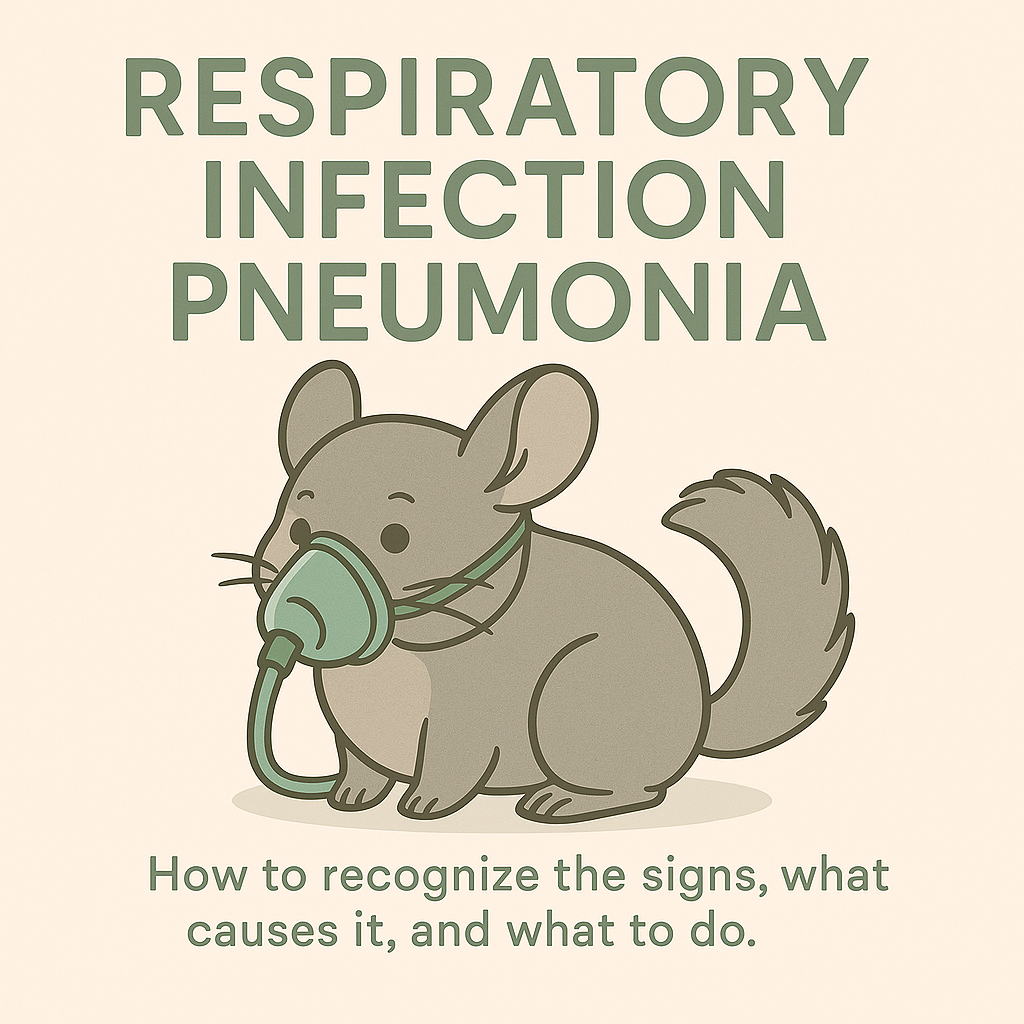 If bacteria, dust, stress, or other factors affect their lungs, they can develop respiratory infections — and in more serious cases, pneumonia. Early detection is incredibly important. A chinchilla who is breathing oddly or not eating can become critical fast, but treatment can save lives when caught early. ⸻ ✅ Common Signs of Respiratory Infection Call a vet if you notice: • Fast or labored breathing • Clicking, rasping, or congested breathing sounds • Runny nose or eye discharge • Sneezing repeatedly • Lethargy (less active) • Loss of appetite • Wetness around nose or mouth • Sitting hunched • Refusing favorite treats • Drooling while breathing hard (distress) If your chin is working hard to breathe, it’s an emergency. ⸻ ✅ Pneumonia — More Serious & Fast Moving Pneumonia can develop quickly and may be fatal without treatment. Possible signs: • Severe breathing effort • Open-mouth breathing (emergency) • Blue or pale gums • Extreme lethargy • Limpness or unable to stand • Very cold body temperature If you ever see these, go to an exotic veterinarian immediately — not the next day. ⸻ ✅ What Causes Respiratory Problems? Chinchillas can get respiratory infections from: ✔ Bacterial infection ✔ Stress or immune suppression ✔ Wet or humid environments ✔ Dust or poor ventilation ✔ Unsanitary cages or ammonia buildup from urine ✔ Housing near smokers, strong cleaners, perfume, candles ✔ Sudden temperature changes ✔ Drafts or cold rooms Some infections happen even with excellent care — it’s not always preventable. ⸻ ✅ How Vets Diagnose It An exotic vet may: • Listen to lungs with a stethoscope • Take X-rays to check for pneumonia or fluid in lungs • Run cultures to identify bacteria • Prescribe antibiotics and/or anti-inflammatories • Give oxygen support in severe cases This is not something home remedies or pet store medication can fix. ⸻ ✅ Treatment Most chinchillas need: ✔ Prescription antibiotics ✔ Pain or anti-inflammatory medication ✔ Syringe feeding if they stop eating ✔ Hydration support ✔ Warm, quiet, stress-free recovery space Critical Care or Carnivore Care may be required until appetite returns. ⸻ ✅ Home Care During Recovery • Keep room warm and calm • Avoid loud noises, drafts, and dust • Stop dust baths until fully recovered (dust can worsen breathing) • Keep hay and water clean and easily reachable • Weigh daily • Watch poop size and frequency • Follow medication schedule exactly • Do not stop antibiotics early Small improvements count — breathing quieter, eating better, more energy. ⸻ ✅ Is Pneumonia Contagious? Bacterial respiratory infections can sometimes spread to other chinchillas. Isolate sick chins until cleared by a vet, keep supplies clean, and wash hands before handling others. ⸻ ✅ Prevention While not all cases are preventable, you can reduce risk: ✔ Clean cage regularly ✔ Use safe bedding (no pine or cedar shavings) ✔ Keep humidity low and temperature stable ✔ Avoid candles, essential oils, perfume, smoking ✔ Proper ventilation — not stuffy, not drafty ✔ High-quality diet to support immune health ✔ Slow introductions and quarantine new animals ⸻ ✅ When to See a Vet Immediately if you see: • Labored breathing • Breathing with effort or open mouth • Blue or pale gums • Not eating • Extreme lethargy • Clicking or crackling breathing sounds • Rapid breathing + drooling • Cold body temperature This is life-threatening — every minute matters. ⸻ ✅ Honest Notes Some chinchillas recover fully. Some require weeks of medication and syringe feeding. Some do not survive severe pneumonia, even with treatment. What matters is that you recognize changes early and get help fast. Respiratory illness is terrifying — but many chins recover because their humans acted quickly. ⸻ ✅ You Are Not Alone If your chin is sick, scared, or hospitalized, you’re doing what a good owner does: fighting for them. Chinchillas are stronger than they look. And they can surprise you with how hard they fight to come home. |
|
|
One chin changed everything now we are changing care for all of them. Because Pippin deserved the best and so does every chin. |
     | Privacy Policy |