
|
✅ Ringworm in Chinchillas
What it looks like, how it spreads, and how to treat it safely. 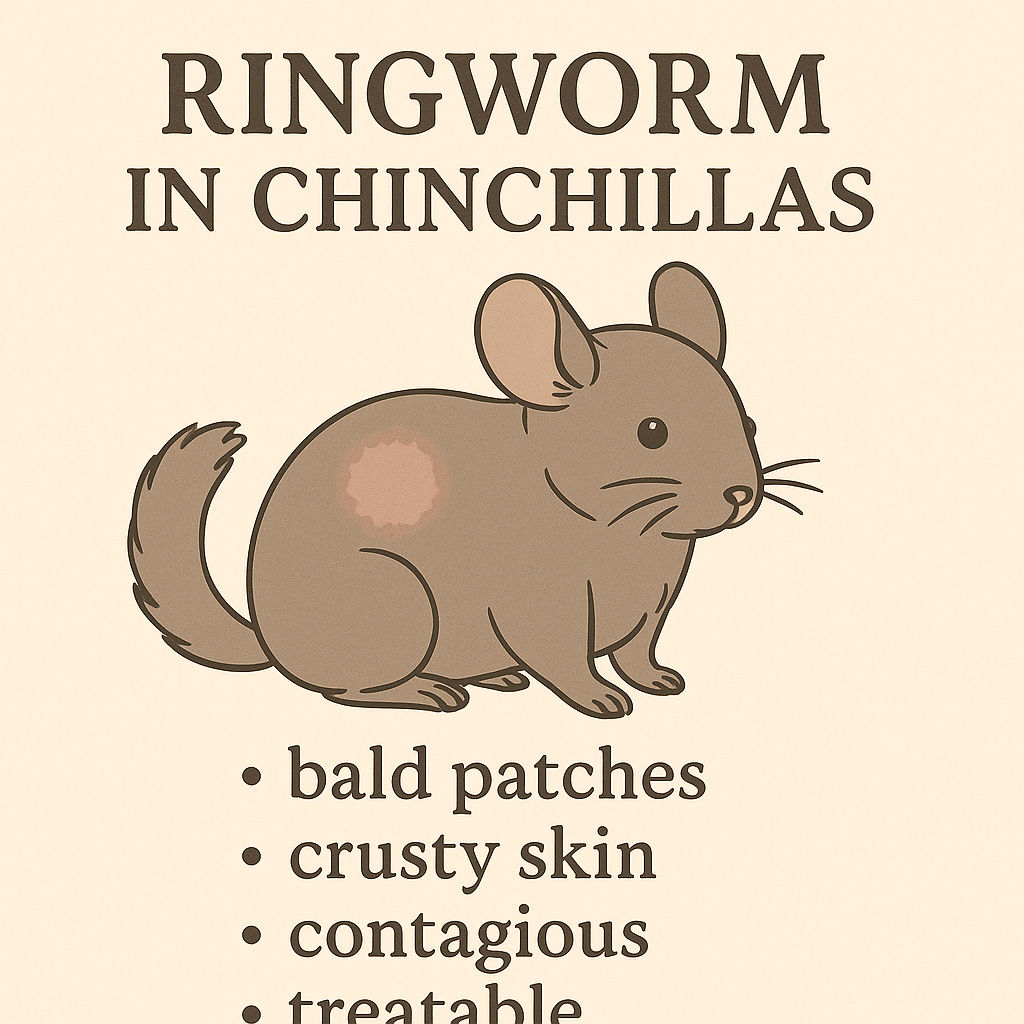 Chinchillas can get ringworm just like cats, dogs, rabbits, and humans. It is treatable with proper care and usually resolves fully with medication and hygiene. ⸻ ✅ Common Signs of Ringworm You may notice: • Round or irregular bald patches • Flaky, dry, crusty, or scaly skin • Redness or irritation • Patchy fur loss around nose, eyes, ears, or front paws • Scratching or rubbing (not always) • Fur that seems “broken” at the ends • Slow regrowth in bald areas Some chins only have one small bald spot — others have several. ⸻ ✅ Is Ringworm Contagious? ✔ Yes — to other chinchillas, other pets, and humans ✔ It spreads through spores in fur, dust, or surfaces ✔ Good hygiene prevents most household transmission If one chin is diagnosed, assume all animals it contacts could carry spores and talk to your vet about precautions. ⸻ ✅ How Vets Confirm Ringworm A vet may: • Examine skin and fur under UV light (Wood’s lamp) • Take a fur/skin sample for fungal culture • Prescribe antifungal medication Home guessing is not reliable — bald patches also happen from fur slip, barbering, mites, or allergies. ⸻ ✅ Treatment Ringworm treatment usually includes: ✅ Topical antifungal medication ✅ Oral antifungal medication (in some cases) ✅ Dust bath restrictions (dust can spread spores) ✅ Cage and room cleaning to prevent reinfection Full recovery takes 2–6 weeks in most cases. Some vets recommend antifungal rinses, sprays, or lime-sulfur dips — these are safe when prescribed and used properly. ⸻ ✅ Cleaning & Prevention To prevent spreading or reinfection: ✔ Wash hands after handling ✔ Clean cage, shelves, and toys regularly ✔ Launder fleece at high heat ✔ Vacuum or replace hay dust, bedding, or towels ✔ Avoid sharing dust bath houses between pets ✔ Keep sick chinchillas separate until cleared Do not use bleach or harsh chemicals inside the cage — stick to pet-safe cleaners or dilute disinfectants recommended by your vet. ⸻ ✅ What About Humans and Other Pets? Humans and other animals can get ringworm. If you notice itching, red patches, or ring-shaped rashes, call your doctor or veterinarian. ⸻ ✅ Does Ringworm Hurt a Chinchilla? Usually, ringworm is: • Uncomfortable or itchy • Annoying • Cosmetic It’s not typically life-threatening, but ignoring it can cause: • Skin damage • Secondary infection • Spread to other animals With treatment, most chins recover completely. ⸻ ✅ When to Call a Vet • New bald patch appears suddenly • Red or crusty skin • Your chin is scratching a lot • Fur looks broken or chewed • Other pets or humans are showing symptoms • Dust baths seem to make patches worse Early treatment keeps it from spreading. ⸻ ✅ Honest Notes Ringworm can happen to any chinchilla — even in clean homes with great care. It doesn’t mean your chinchilla or your home is dirty. Spores are common in hay, dust, pet bedding, and other animals. It only takes one microscopic particle to start an infection. You didn’t do anything wrong. ⸻ ✅ You’ve got this With medication, cage hygiene, and patience, chins usually recover fully. It’s a temporary problem with a permanent solution. You’re doing the right thing just by learning what to look for. |
|
|
One chin changed everything now we are changing care for all of them. Because Pippin deserved the best and so does every chin. |
     | Privacy Policy |