
|
✅ Seizures in Chinchillas
Causes, symptoms, what to do, and when to see a vet 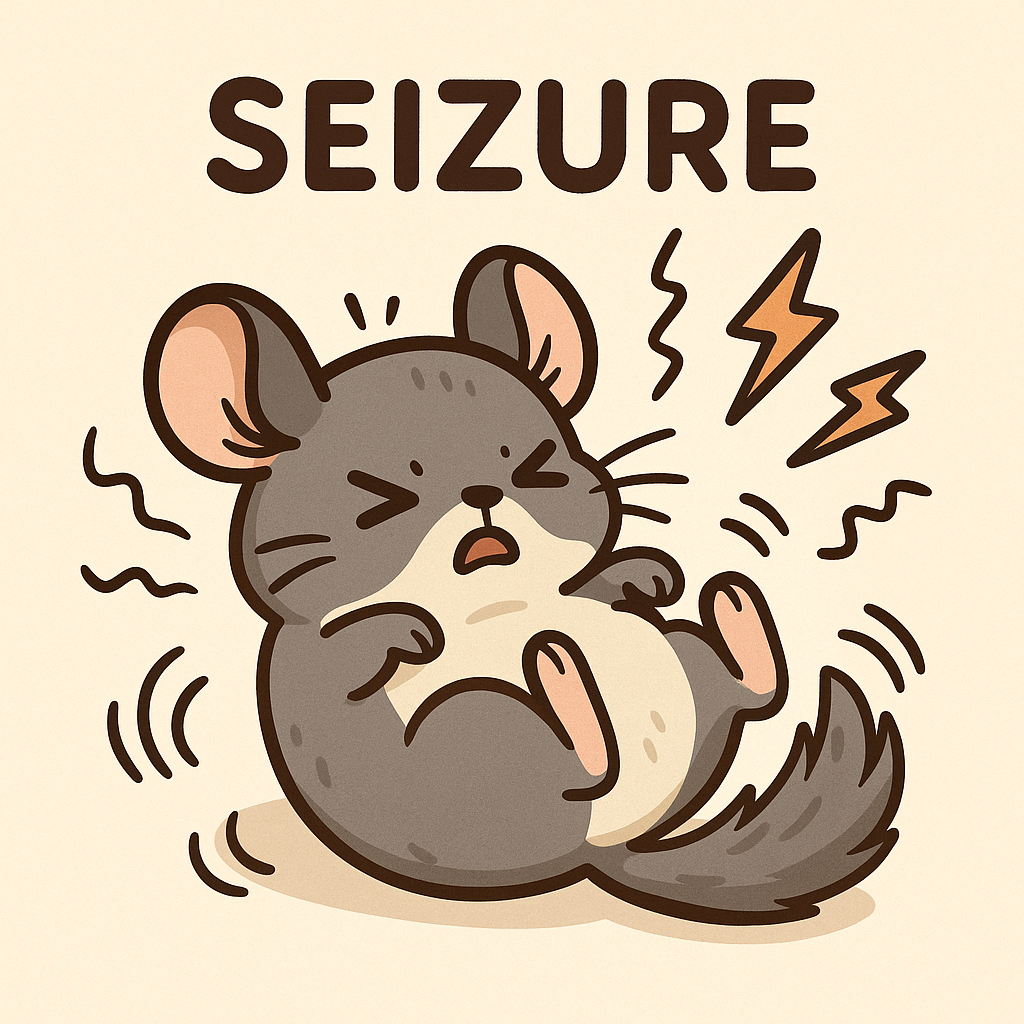 A seizure is caused by abnormal activity in the brain — sometimes from illness, pain, low blood sugar, injury, or genetics. Most importantly: seizures are a medical emergency and should always be evaluated by an exotic veterinarian. ⸻ ✅ Signs of a Seizure A chinchilla may show: • Sudden stiffening or falling onto its side • Uncontrolled shaking or jerking • Paddling or kicking motions • Rapid breathing • Teeth chattering • Brief loss of awareness or responsiveness • Temporary blindness or confusion afterward • Disorientation, wobbling, or hiding after the event Some seizures last only a few seconds — others longer. Any seizure, no matter how small, needs veterinary care. ⸻ ✅ Common Causes Seizures can be triggered by: • Low blood sugar (often in very young, very small, or sick chins) • Head trauma / falls • Severe dehydration • Heatstroke • Toxins (unsafe plants, cleaning chemicals, scented products) • Nutritional imbalance • Pain • Genetic neurological issues • Infection or inflammation in the brain Sometimes the cause is never fully identified — but treating underlying illness can help prevent more episodes. ⸻ ✅ What To Do During a Seizure Stay calm and follow these steps: 1. Do not pick up your chinchilla They may jerk, bite unintentionally, or injure themselves. 2. Clear the space Move water bottles, toys, and hard objects away so they can’t hit anything. 3. Keep the area quiet and dim Loud noises and lights can worsen neurological episodes. 4. Time the seizure Duration matters to your vet. 5. Call an exotic vet immediately If your chin stops breathing, turns blue/grey, or remains unresponsive — this is an emergency. ⸻ ✅ After the Seizure Once it stops: • Speak calmly • Offer water or a small amount of food (if they are fully alert) • Keep them warm and quiet • Transport safely to a vet Do not force feed or syringe water while they are confused or weak. Take note of: • How long it lasted • What the chin was doing before it started • Any toxins or unsafe foods in the environment • Any falls or recent illnesses This helps your vet diagnose the cause. ⸻ ✅ How Vets Diagnose Seizures Your exotic vet may recommend: • Bloodwork (to check sugar, minerals, and infection) • X-rays (if trauma or swallowed objects are possible) • Neurological exam • Hydration and supportive care • Medications for inflammation, pain, or infection Some chins require long-term medication if seizures recur. ⸻ ✅ Prevention & Safety You can reduce risks by: ✅ Keeping the environment cool ✅ Using only chin-safe cleaning products and foods ✅ Preventing falls and rough handling ✅ Ensuring consistent eating and hydration ✅ Keeping toxic plants and chemicals far away ✅ Monitoring sick or recovering chins closely If your chin has ever had a seizure, let all vets know — even for future visits. ⸻ ✅ Final Thoughts A seizure is scary, but many chinchillas recover fully with fast veterinary care and supportive treatment. Trust your instincts — if something feels wrong, it’s always better to get help early. You’re doing the right thing by learning and being prepared. |
|
|
One chin changed everything now we are changing care for all of them. Because Pippin deserved the best and so does every chin. |
     | Privacy Policy |